When it comes to maintaining a healthy living environment, many homeowners and property buyers focus on visible issues like plumbing leaks, roof damage, or electrical concerns. However, one of the most dangerous and often invisible threats to a home’s safety and the health of its occupants is mold. Mold is a type of fungus that thrives in damp, humid conditions and can grow unnoticed for years behind walls, under floors, or in HVAC systems.
A mold inspection is the process of thoroughly evaluating a building to detect signs of mold growth, determine the cause of moisture that allows it to thrive, and assess any potential health hazards. Mold inspections are crucial for homes with known water damage, recurring moisture problems, or musty odors, as well as for buyers evaluating the safety of a new property.
This article will provide an in-depth understanding of what mold inspections involve, who conducts them, what tools and techniques are used, the cost, and why they’re essential for health and safety.
Do I Need a Mold Inspection?
Yes, you likely need a mold inspection if you notice persistent musty odors, visible signs of mold growth, or have experienced recent water damage such as leaks, flooding, or excessive humidity. Mold can grow silently behind walls, under flooring, or inside HVAC systems, making it difficult to detect without professional tools.
If you or anyone in your household suffers from allergies, asthma, frequent headaches, or respiratory issues, mold could be the hidden cause. Additionally, if you’re buying a home—especially an older one or a property with a history of moisture problems—a mold inspection is a smart precaution.
It can uncover hidden infestations and save you from unexpected health hazards or costly remediation work later. Even in the absence of obvious symptoms, regular inspections are a wise choice in damp climates or areas prone to humidity. A certified mold inspection ensures your indoor environment remains healthy, safe, and free from potentially dangerous fungal growth.
What Happens During a Mold Inspection?
A mold inspection is a systematic process conducted by a certified professional to detect the presence of mold, identify moisture sources, and assess the extent of contamination. The inspection begins with a visual assessment of the property, focusing on areas that are prone to moisture—such as basements, bathrooms, kitchens, attics, and crawl spaces. The inspector looks for visible signs of mold, such as black, green, or white spots, water stains, discoloration on walls or ceilings, warped materials, and musty odors.
Next, the inspector uses moisture detection tools such as moisture meters and infrared thermal imaging cameras to find hidden damp areas behind walls, under floors, and inside ceilings. These devices help locate the source of water that allows mold to thrive. If necessary, the inspector will take air samples to test the concentration of mold spores in the indoor environment and compare it with outdoor levels. These samples are sent to a certified lab for analysis to determine the type and quantity of mold spores present.
In some cases, surface sampling is conducted using swabs or tape lifts to test visible mold growth. Inspectors may also examine the HVAC system, checking air ducts and filters, since mold can easily spread through these pathways. After all testing and evaluations are complete, the inspector provides a detailed report outlining the findings, lab results, mold types, and recommended remediation steps if mold is found. This comprehensive process ensures both the detection and documentation of mold issues, helping homeowners or buyers make informed decisions about necessary repairs and indoor air safety.
What Can I Expect from a Mold Inspector?
When you hire a mold inspector, you can expect a thorough and professional evaluation of your property focused on identifying potential mold issues and the sources of moisture that contribute to mold growth. The process typically begins with a detailed visual inspection, during which the inspector will examine high-risk areas such as basements, bathrooms, kitchens, attics, and HVAC systems.
Using specialized tools like moisture meters, thermal imaging cameras, and hygrometers, they’ll detect hidden moisture behind walls or under flooring—conditions where mold often thrives. If mold is suspected, the inspector may collect air samples or surface swabs to be analyzed in a certified lab, identifying the types and concentrations of mold spores present.
You’ll also receive a comprehensive written report summarizing their findings, including the location and severity of mold growth, moisture sources, and remediation recommendations if needed. A professional mold inspector provides not just detection but also education, helping you understand the risks involved and the steps needed to maintain a healthy indoor environment.
What Affects the Cost of a Mold Inspection?
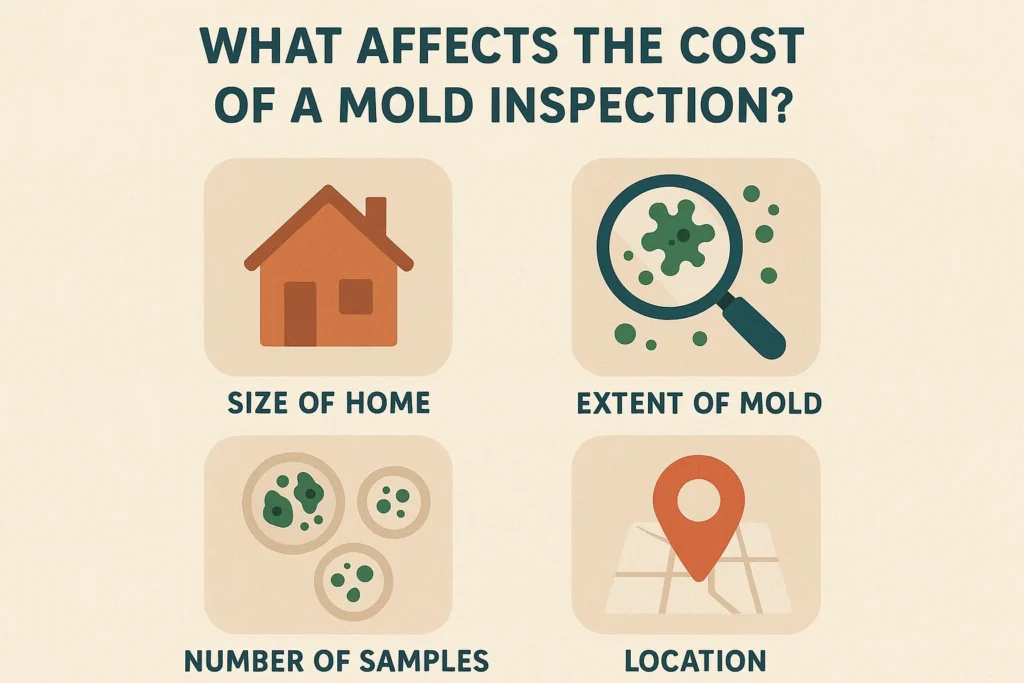
The cost of a mold inspection is influenced by several key factors, including the size and layout of the property. Larger homes require more time to inspect and often involve multiple testing areas, which increases labor and analysis costs. Another major factor is the type and extent of testing performed—basic visual inspections are typically more affordable, while comprehensive services involving air sampling, surface swabs, or infrared moisture detection raise the price significantly due to lab fees and specialized equipment.
The number of samples collected also affects the final cost, as each one requires separate processing and analysis. Additionally, properties with limited accessibility, such as those with crawl spaces, attics, or hidden moisture-prone areas, may require extra time and effort, increasing the inspection cost. Location also plays a role—urban areas or regions with high demand for mold services may have higher rates. Lastly, the inspector’s experience, certification, and reputation can impact pricing, as well-qualified professionals often charge more for their advanced knowledge and reliability.
When Should You Get a Mold Inspection and Testing?
If you see visible mold, notice a strong musty odor, or your home inspector finds signs of water damage—whether recent or old—it’s a good idea to call a professional mold inspector. Mold can still be present even if damage appears old or hidden behind walls.
A qualified mold inspector is trained to collect accurate air and surface samples and assess indoor air quality. This expertise ensures reliable results and proper recommendations for mold remediation. Unlike DIY test kits, professional inspections include multiple testing methods, which are necessary because mold spores can move and fluctuate throughout the home. This comprehensive approach leads to a more precise diagnosis and effective solution.
Tips for Finding the Right Mold Inspector
When selecting a mold remediation company, it’s crucial to ensure they have the appropriate experience, professional training, and relevant certifications. Keep in mind that most mold remediation companies do not have certified mold inspectors on staff. To avoid any potential conflict of interest, mold inspections are typically conducted by independent professionals.
Before hiring a company, consider asking the following important questions:
- Is the company affiliated with any reputable industry organizations?
Look for associations such as:
- American Council for Accredited Certification (ACAC)
- Indoor Air Quality Association (IAQA)
- National Air Duct Cleaners Association (NADCA)
- American Industrial Hygiene Association (AIHA)
- American Council for Accredited Certification (ACAC)
- Does the company employ certified mold inspectors or investigators?
If not, can they refer you to a trustworthy and independent professional? - Will the mold inspector provide a detailed remediation work plan?
Ensure that the plan adheres to industry standards, specifically the Institute of Inspection, Cleaning and Restoration Certification (IICRC) S520 Standard for mold remediation practices.
Should I Get a Mold Inspection When Buying a House?
Yes, you should get a mold inspection when buying a house—especially if the property shows signs of water damage, has a musty smell, or is located in a humid climate. A general home inspection may point out potential moisture issues, but it often doesn’t include a thorough check for mold. Mold can hide behind walls, under floors, and inside HVAC systems, making it hard to detect without specialized tools or training. A professional mold inspection can reveal hidden problems that could lead to costly repairs or health issues down the road.
Mold exposure can trigger allergies, respiratory issues, and even long-term health complications. For families with young children, elderly members, or anyone with pre-existing health concerns, knowing about mold in advance is critical. Moreover, mold remediation can be expensive and is often not covered by homeowners’ insurance if the damage wasn’t caused by a covered peril. That’s why investing in a mold inspection now can save you thousands later—and potentially give you negotiation leverage in the home buying process.
In many cases, sellers may be willing to remediate the mold issue, reduce the asking price, or provide a credit toward repairs. Getting a mold inspection before finalizing the purchase ensures you make a well-informed decision. Whether it’s peace of mind or protection against a major hidden problem, a mold inspection is a smart step when buying a home.
How Long Does a Mold Inspection Take?
The length of a mold inspection typically depends on the size of the property, the extent of the suspected mold problem, and whether additional testing is required. For most residential homes, a standard mold inspection takes about 1 to 2 hours. Smaller properties like apartments may take less than an hour, while larger homes or commercial buildings can require 2 to 3 hours or more.
If the inspector needs to take air or surface samples for laboratory analysis, that may add 30 to 60 minutes to the process. Factors such as multiple floors, crawl spaces, attics, or HVAC systems also increase the inspection time. In general, the more complex the structure and the mold situation, the longer the inspection will take.
A comprehensive mold inspection ensures that all potential sources of moisture and contamination are properly identified, making it worth the time investment for accurate results and effective remediation planning.
How to Get a Free Mold Inspection?
Getting a free mold inspection is possible if you know where to look and how to approach the process. Many mold remediation companies offer complimentary initial inspections as a way to attract potential customers. These inspections typically include a visual assessment of your property for signs of mold, moisture damage, and musty odors.
To find these services, search for local mold remediation companies and check their websites or call to ask if they provide free consultations. Be cautious, though—free inspections may not include lab testing or detailed reports. Some home insurance companies or property management firms may also provide free inspections under specific conditions, especially after water damage or natural disasters.
Additionally, some local health departments or non-profit organizations may offer free or low-cost mold evaluations for eligible residents. Always confirm what the free inspection covers and ensure the inspector is certified or experienced before agreeing to the service.
Conclusion
A mold inspection is an essential step in maintaining a safe and healthy home environment, especially after water damage or before buying a property. It helps detect hidden mold, identify moisture sources, and prevent costly repairs and health issues. Whether you suspect mold or simply want peace of mind, hiring a certified inspector ensures a thorough evaluation and reliable results. With proper testing and expert guidance, you can take the necessary steps to protect your home and loved ones from the dangers of mold. Don’t wait until symptoms appear—being proactive with a mold inspection can save you stress, money, and long-term health risks in the future.
FAQS
1. Can I Stay in My Home During a Mold Inspection?
Yes, in most cases, you can remain in your home during a mold inspection. The process is non-invasive and typically involves visual assessments, air sampling, and moisture detection. However, if the inspection uncovers severe mold growth or areas that require extensive testing or remediation, the inspector may advise limited access to those zones. If you or your family members have severe mold allergies or respiratory conditions, it might be a good idea to stay away from areas being inspected or ventilated, especially during air sampling.
2. What Does a Mold Inspection Report Include?
A professional mold inspection report typically includes several key elements:
- A summary of the inspector’s observations
- Identification of visible mold growth or moisture problems
- The results of air or surface sampling (if conducted)
- Types and concentration of mold spores detected
- Photos of affected areas
- Recommended steps for remediation and prevention
This detailed documentation is valuable for making informed decisions, especially during real estate transactions or insurance claims.
3. How Often Should I Get a Mold Inspection?
How frequently you should get a mold inspection depends on several factors. For most homes, a mold inspection every 2–3 years is sufficient, particularly in humid or flood-prone regions. However, if your home has a history of leaks, high humidity, or poor ventilation, you may want to schedule inspections annually. It’s also smart to arrange an inspection after a major weather event (like flooding or hurricanes) or before renovating older properties to uncover hidden mold behind walls and floors.
4. Can Pets Be Affected by Mold in the Home?
Yes, pets can suffer health effects from mold exposure just like humans. Dogs, cats, and other animals may develop symptoms such as coughing, sneezing, skin irritation, or lethargy if mold spores are present in high concentrations. Since pets spend more time close to the floor where spores settle, they may even be more sensitive to exposure. A mold inspection is an important step in ensuring a safe environment not just for people but also for household pets.
5. What’s the Difference Between Mold Testing and Mold Inspection?
Mold inspection refers to the visual and equipment-based assessment of a property to detect signs of mold and moisture. It focuses on identifying where mold might be growing and what’s causing it. On the other hand, mold testing involves collecting air or surface samples and sending them to a lab for analysis. Testing helps identify the type and concentration of mold spores present. While inspection can be done without testing in some cases, combining both provides a more complete understanding of mold problems.
Home Inspection Services Across Florida
PatriotInspect delivers certified, trusted, and location-specific inspection services across Southwest Florida and Miami-Dade County.
Four Point Inspection – Fort Myers
Insurance-focused inspection for roofing, plumbing, electrical, and HVAC systems.
Home Inspection – Fort Myers
Complete home inspection services for buyers, sellers, and homeowners.
Mold Inspection – Fort Myers
Professional mold inspections for moisture-related issues and indoor air quality.
Wind Mitigation – Fort Myers
Identify wind-resistant features that may help reduce insurance premiums.
Home Inspection – Cape Coral
Certified and trusted home inspections tailored for Cape Coral properties.
Four Point Inspection – Cape Coral
Insurance-required inspections for Florida homes.
Wind Mitigation – Cape Coral
Wind mitigation inspections to support insurance discounts.
Condo Inspection – Cape Coral
Focused inspections for condo units and shared systems.
Mold Inspection & Testing – Cape Coral
Advanced mold testing and inspection services.
Condo Inspection – Naples
Detailed condo inspections for Naples homeowners and buyers.
Four Point Inspection – Naples
Insurance-focused system inspections.
Mold Inspection & Testing – Naples
Humidity-related mold inspections and testing services.
Wind Mitigation – Naples
Wind-resistant feature verification for insurance savings.
Home Inspection – Bonita Springs
Comprehensive inspections for buyers and sellers.
Four Point Inspection – Bonita Springs
Insurance-required inspection for key home systems.
Wind Mitigation – Bonita Springs
Wind mitigation reports to help lower insurance costs.
Mold Inspection & Testing – Bonita Springs
Mold detection and moisture assessment services.
Condo Inspection – Bonita Springs
Specialized condo inspections for interior systems.
Home Inspection – Marco Island
Full property inspections for coastal homes.
Four Point Inspection – Marco Island
System-focused inspections for insurance needs.
Wind Mitigation – Marco Island
Storm-resistance inspections for coastal properties.
Condo Inspection – Marco Island
Condo inspections focused on unit-specific systems.
Mold Testing – Marco Island
Professional mold testing for indoor air quality concerns.
Radon Testing – Marco Island
Accurate radon testing for long-term health protection.
Home Inspection – Miami-Dade County
Trusted home inspection services across Miami-Dade County.
Four Point Inspection – Miami-Dade County
Insurance-focused inspections for key home systems.
Mold Inspection & Testing – Miami-Dade County
Mold detection services for humid environments.
Condo Inspection – Miami-Dade County
Certified condo inspections for urban and coastal properties.