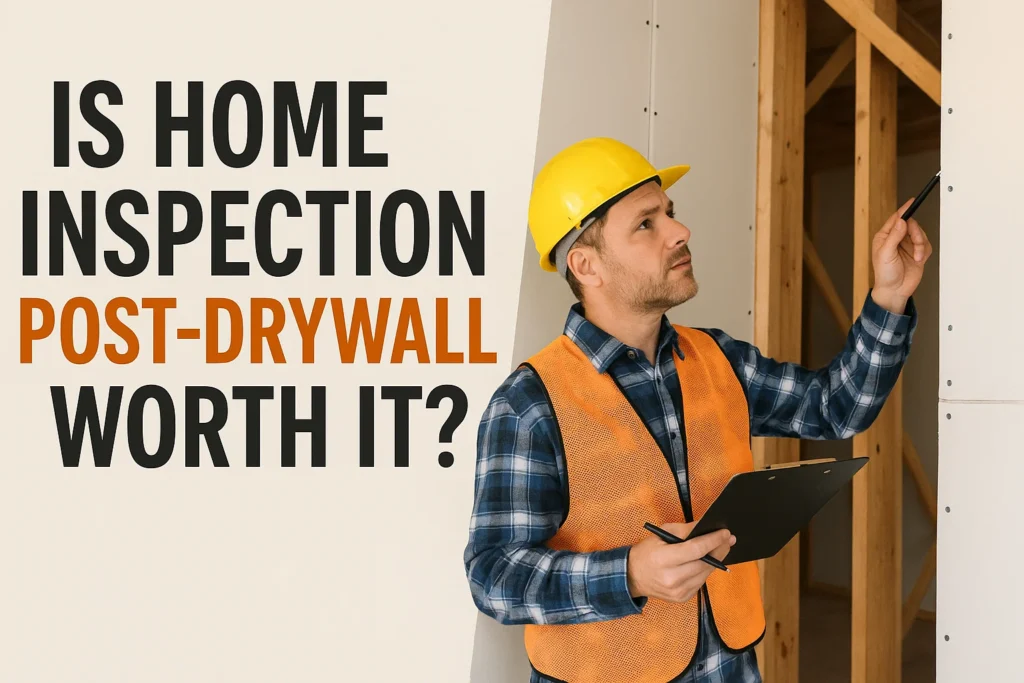
When building a new home, there are several phases during which inspections play a crucial role in ensuring the quality and safety of the construction. One often overlooked but incredibly valuable stage is the post-drywall inspection. So, is a home inspection after drywall worth it? The short answer is yes. A post-drywall inspection helps identify issues hidden behind walls before final finishes are installed, saving you time, money, and potential structural headaches.
This article delves into the reasons why this inspection is crucial, what inspectors examine at this stage, how it differs from other inspections, and how it ultimately benefits homeowners.
What Is Home Inspection Post Drywall?
A home inspection post drywall, also known as a pre-paint or post-sheetrock inspection, is a critical stage in the construction process that takes place after the drywall has been installed but before painting or final finishes begin. At this stage, the walls and ceilings are covered, but many interior elements—such as baseboards, cabinetry, and flooring—have not yet been installed. This timing allows the home inspector to examine hidden systems like electrical wiring, plumbing lines, HVAC ductwork, insulation placement, and framing components through attic access panels or unfinished spaces.
Unlike the pre-drywall inspection, which occurs before the drywall is put up, a post-drywall inspection helps ensure that what’s now behind the walls was done correctly and complies with building codes. Inspectors will also look for issues such as drywall defects, bulging or uneven joints, improper screw patterns, cracks, moisture staining, or signs of leaks that may have developed during or after installation.
This inspection is especially important for identifying any hidden construction flaws or substandard workmanship before they are concealed by finishes such as paint, tile, or trim. Since repairs are significantly easier and less costly at this point in the build, a post-drywall inspection can save future homeowners both time and money, while adding peace of mind that the home is structurally sound and properly built.
Is a Post-Drywall Home Inspection Necessary?
Yes, a home inspection after drywall installation is worth it, and here’s why:
1. Identifies Hidden Problems Early:
Once drywall is up, it becomes difficult and expensive to inspect or fix hidden issues. A post-drywall inspection helps detect problems like plumbing leaks, faulty electrical wiring, and framing defects—all of which, if left unaddressed, can lead to serious damage such as water infiltration, fire hazards, or structural issues down the line.
2. Saves You from Costly Repairs:
Although it’s an extra upfront cost, this inspection can prevent major repair expenses later. Fixing issues hidden behind drywall (like a leaky pipe or bad wiring) could cost hundreds or even thousands of dollars. In contrast, the inspection itself is a small investment that can protect your budget long-term—much like insurance for your home.
3. Provides Peace of Mind:
Beyond catching issues, a post-drywall inspection gives you confidence that your home complies with building codes and is being constructed with safety and quality in mind. It ensures everything behind the walls—structure, systems, and workmanship—is sound before finishes are added.
What To Expect During a Post-Drywall Inspection?
A post-drywall inspection, also known as a pre-paint inspection, takes place after the drywall has been installed but before paint, trim, and final finishes are applied. During this stage, a qualified home inspector evaluates key areas of the home that are still partially visible or accessible to ensure everything has been installed correctly behind the walls. You can expect the inspector to check for structural alignment, electrical wiring placement, plumbing rough-ins, HVAC ductwork routing, insulation quality, and fire blocking. The goal is to verify that what lies behind the drywall meets building code requirements, construction standards, and your expectations.
This inspection is essential because, once the finishing touches are applied, identifying or correcting hidden issues becomes much harder and costlier. The inspector will typically use tools like moisture meters and infrared cameras to detect hidden water leaks, insulation gaps, or potential mold risks. They’ll also look for any safety hazards, such as improperly secured wires or ventilation issues. A thorough post-drywall inspection gives homeowners peace of mind and an opportunity to request repairs before moving on to the finishing phase of construction.
Common Issues Found During Post-Drywall Inspections
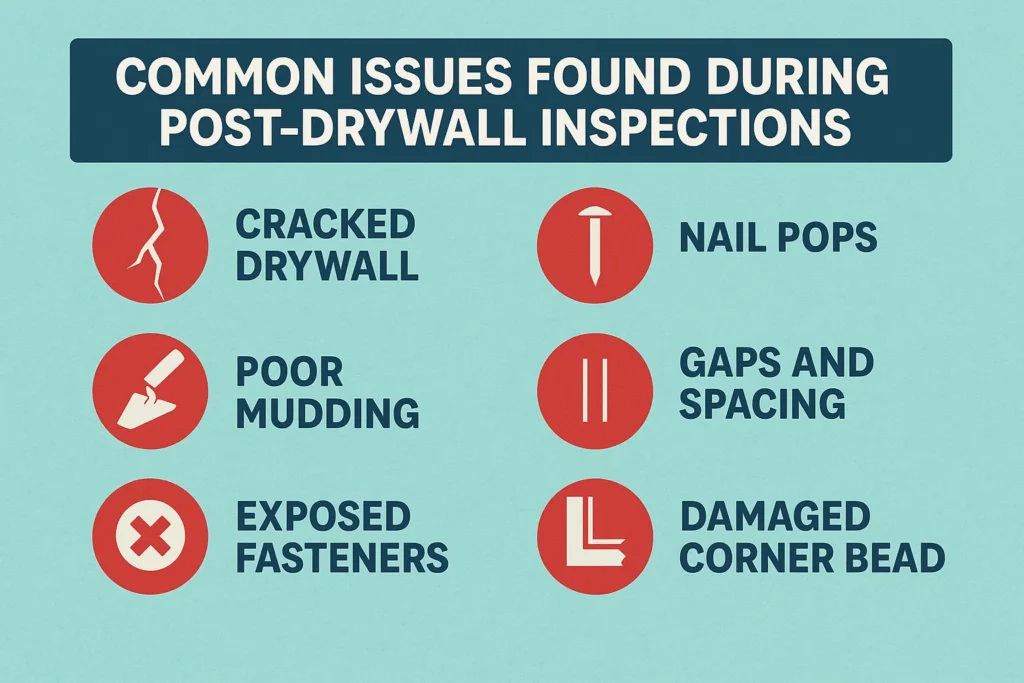
During a post-drywall inspection, many hidden or overlooked problems can come to light, despite the walls being closed in. One of the most common issues is improper insulation installation. Inspectors often find voids, compressed insulation, or missing batts, which can compromise energy efficiency and indoor comfort. Another frequent concern is poor electrical work—this includes loose wiring, incorrectly placed outlets or switches, and unprotected junction boxes hidden behind drywall, which pose serious safety risks.
In addition to electrical flaws, plumbing issues are also a frequent discovery. These may include misaligned pipes, improper venting, or minor leaks that can go unnoticed until they cause extensive water damage. HVAC concerns are also common, such as disconnected ducts, crushed flex ducts, or systems that don’t meet the required airflow standards. These faults can lead to uneven heating or cooling once the home is occupied.
Furthermore, post-drywall inspections often reveal structural misalignments, like warped studs, bowed walls, or off-level framing that can affect the fit and finish of trim, cabinetry, or doors. Fire-blocking violations or missing draft-stopping components are additional problems that inspectors often catch—issues that are critical for fire safety but easily hidden once drywall is up. Identifying and addressing these problems at this stage prevents future complications, saves on costly repairs, and ensures the home is built to code and quality standards.
Key Areas Assessed in a Post-Drywall Inspection
- Double-Check Insulation Coverage
Ensure all wall cavities are filled with insulation without gaps or compression. Pay special attention to corners, around electrical boxes, and behind pipes—areas that are commonly missed but crucial for energy efficiency and comfort. - Verify Electrical Box Placement and Accessibility
Make sure all electrical outlets, switches, and junction boxes are correctly positioned, flush with the drywall, and not covered or obstructed. Improper placement can cause code violations or lead to drywall repairs after finishing. - Inspect for Proper Plumbing Setup
Look for securely fastened pipes, correct slope in drain lines, and evidence of leaks around fittings. It’s easier and less costly to correct plumbing issues now than after fixtures and tile are installed. - Review HVAC Duct Installation
Confirm that ducts are properly connected, sealed, and not kinked or crushed. Good airflow ensures heating and cooling systems work efficiently and maintain consistent temperatures throughout the house. - Evaluate Fire Blocking and Draft Stops
Check for installed fire blocks in wall cavities and draft stops between floors or wall openings. These features are critical for fire safety and are often hidden or overlooked once drywall is installed.
How a Post-Drywall Inspection Protects Homebuyers?
A post-drywall inspection acts as a protective shield for homebuyers, helping identify issues while they’re still accessible and relatively easy to fix. Once drywall is installed, the home’s structure, wiring, plumbing, and HVAC systems become partially concealed. This inspection gives buyers a rare opportunity to catch hidden problems before costly finishes like paint, cabinets, and flooring are added. It ensures that everything behind the walls meets local building codes, manufacturer guidelines, and quality construction standards.
One major way this inspection protects buyers is by preventing expensive future repairs. For instance, spotting a small plumbing leak or loose electrical connection now avoids damage that might otherwise go unnoticed until after move-in, when repairs would require tearing down finished walls. It also gives peace of mind that the home’s thermal envelope is effective—proper insulation and air sealing are critical to energy efficiency and long-term comfort, and these components are rarely visible after finishing.
Moreover, the inspection reinforces accountability. Builders know that a qualified inspector will evaluate their work, which can encourage higher-quality craftsmanship. If the inspector discovers code violations or deviations from the construction plan, homebuyers have documentation to request corrections before final payment or closing. This is especially important in new builds, where rushed timelines sometimes result in overlooked details.
Conclusion
In conclusion, a home inspection post-drywall is worth the investment. It serves as a crucial checkpoint between the rough construction phase and the final finish stage, giving homebuyers a last opportunity to identify hidden flaws, safety issues, or code violations before they become buried behind paint, trim, and flooring. From catching improperly installed insulation and unsafe electrical connections to verifying structural integrity and plumbing accuracy, this inspection ensures that your home is being built to standard and provides the quality you expect.
FAQS
1. Can I perform a post-drywall inspection myself instead of hiring a professional?
While you can conduct a basic visual walkthrough, a licensed home inspector brings professional tools, experience, and an understanding of local building codes that a typical homeowner may lack. Inspectors use infrared cameras, moisture meters, and years of expertise to uncover hidden issues that would otherwise be missed. For peace of mind and to ensure no critical components are overlooked, hiring a professional is strongly recommended.
2. Who pays for the post-drywall inspection—the builder or the buyer?
In most cases, the homebuyer pays for the post-drywall inspection. However, this can vary depending on the builder’s policies, local practices, or what’s negotiated in your purchase agreement. Some builders may include third-party inspections as part of their quality assurance process, but generally, it’s considered the buyer’s responsibility.
3. What happens if problems are found during the post-drywall inspection?
If issues are discovered, the inspector will document them in a detailed report. You can then present the report to your builder or contractor and request that they correct the problems before construction progresses. Most builders will cooperate, especially if the defects involve code violations or workmanship issues. It’s essential to address these concerns before finishing materials are added, as repairs afterward are more disruptive and costly.
4. How long does a post-drywall inspection typically take?
A standard post-drywall inspection typically takes 1.5 to 3 hours, depending on the size of the home and the complexity of the systems installed. Larger homes or those with advanced features like custom HVAC layouts or smart wiring may require additional time. The inspector mustn’t be rushed, as attention to detail during this phase is critical.
5. Is it possible to schedule a post-drywall inspection too early or too late?
Yes. If you schedule it too early, the drywall may not be fully installed, limiting what the inspector can assess. If you wait too long, finishing elements like paint, trim, or cabinetry may be added, hiding problems. The ideal time is right after drywall installation but before painting or interior finish work begins. Coordinating with your builder and inspector ensures the timing is just right.
Home Inspection Services Across Florida
PatriotInspect delivers certified, trusted, and location-specific inspection services across Southwest Florida and Miami-Dade County.
Four Point Inspection – Fort Myers
Insurance-focused inspection for roofing, plumbing, electrical, and HVAC systems.
Home Inspection – Fort Myers
Complete home inspection services for buyers, sellers, and homeowners.
Mold Inspection – Fort Myers
Professional mold inspections for moisture-related issues and indoor air quality.
Wind Mitigation – Fort Myers
Identify wind-resistant features that may help reduce insurance premiums.
Home Inspection – Cape Coral
Certified and trusted home inspections tailored for Cape Coral properties.
Four Point Inspection – Cape Coral
Insurance-required inspections for Florida homes.
Wind Mitigation – Cape Coral
Wind mitigation inspections to support insurance discounts.
Condo Inspection – Cape Coral
Focused inspections for condo units and shared systems.
Mold Inspection & Testing – Cape Coral
Advanced mold testing and inspection services.
Condo Inspection – Naples
Detailed condo inspections for Naples homeowners and buyers.
Four Point Inspection – Naples
Insurance-focused system inspections.
Mold Inspection & Testing – Naples
Humidity-related mold inspections and testing services.
Wind Mitigation – Naples
Wind-resistant feature verification for insurance savings.
Home Inspection – Bonita Springs
Comprehensive inspections for buyers and sellers.
Four Point Inspection – Bonita Springs
Insurance-required inspection for key home systems.
Wind Mitigation – Bonita Springs
Wind mitigation reports to help lower insurance costs.
Mold Inspection & Testing – Bonita Springs
Mold detection and moisture assessment services.
Condo Inspection – Bonita Springs
Specialized condo inspections for interior systems.
Home Inspection – Marco Island
Full property inspections for coastal homes.
Four Point Inspection – Marco Island
System-focused inspections for insurance needs.
Wind Mitigation – Marco Island
Storm-resistance inspections for coastal properties.
Condo Inspection – Marco Island
Condo inspections focused on unit-specific systems.
Mold Testing – Marco Island
Professional mold testing for indoor air quality concerns.
Radon Testing – Marco Island
Accurate radon testing for long-term health protection.
Home Inspection – Miami-Dade County
Trusted home inspection services across Miami-Dade County.
Four Point Inspection – Miami-Dade County
Insurance-focused inspections for key home systems.
Mold Inspection & Testing – Miami-Dade County
Mold detection services for humid environments.
Condo Inspection – Miami-Dade County
Certified condo inspections for urban and coastal properties.