A wind mitigation inspection for single-family homes is a crucial step for homeowners in hurricane-prone areas like Naples, FL. This inspection evaluates a home’s structural integrity and identifies vulnerabilities in roofs, doors, windows, and other critical components. By conducting a thorough roof and window inspection and a building envelope inspection, homeowners can understand their property’s home wind resistance evaluation and take steps to reinforce weak points.
Proper preparation, maintenance, and upgrades not only protect families during storms but also help secure insurance premium discounts and hurricane insurance savings. Investing in a professional inspection ensures long-term safety and potential financial benefits.
What is a Wind Mitigation Inspection for Single-Family Homes?
A wind mitigation inspection for single-family homes is a specialized evaluation designed to assess how well a home can resist hurricane-force winds and severe storms. Inspectors perform a windstorm inspection for homes, examining both visible and hidden components that influence the home’s resilience. The process includes a roof and window inspection, checking the integrity of shingles, roof deck attachments, and impact-resistant glass.
The goal is to understand the home’s structural vulnerabilities and recommend solutions for enhancing safety. In regions like Naples, FL, where storm exposure is high, these inspections are essential to reduce the risk of wind-related damage. Homeowners gain insights into potential weak points, allowing them to implement improvements before a hurricane strikes, which in turn may result in wind mitigation insurance credits.
During the inspection, professionals also review historical maintenance and any previous upgrades to determine whether existing structures meet the latest standards. They perform a thorough home wind resistance evaluation, considering the roof type and wind resistance, the condition of reinforced doors and windows, and the quality of hurricane straps and clips.
A complete inspection ensures the home is prepared for hurricane-force winds, providing a safety benchmark. By documenting findings in a detailed report, homeowners can negotiate hurricane insurance savings, secure Florida home insurance discounts, and plan future home improvements to enhance both safety and insurance benefits.
Definition and Purpose
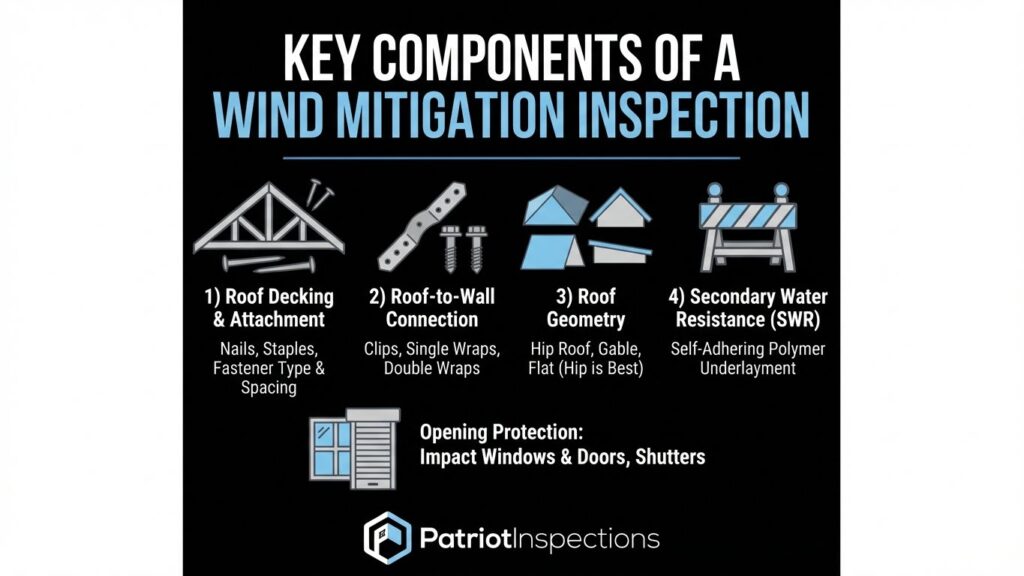
A wind mitigation inspection serves as a single-family home wind mitigation assessment. Its primary purpose is to evaluate the strength of roofs, walls, doors, and windows against extreme wind loads. Homes in hurricane-prone regions, such as Naples, FL, benefit significantly from this evaluation. The inspection identifies structural weaknesses, recommends improvements, and provides documentation that can reduce insurance costs while enhancing home safety.
Why Wind Mitigation Inspections Are Important
Wind mitigation inspections play a critical role in protecting homes from the destructive power of hurricanes and severe storms. A proper inspection examines roof deck attachment, opening protection for homes, and structural components to determine the home’s resistance. These inspections are particularly important in hurricane-prone areas, where unprepared homes face significant risk of structural failure.
Homeowners receive detailed reports that indicate vulnerabilities, enabling them to strengthen roofs, reinforce doors and windows, and apply DIY wind mitigation improvements. Beyond safety, these inspections offer financial incentives through insurance premium discounts, allowing property owners to save on hurricane insurance premiums.
Moreover, understanding the importance of wind mitigation inspections encourages proactive maintenance. Homes undergo evaluations that highlight weak points, such as gable ends, garage doors, and roof overhangs. Addressing these issues improves overall structural integrity and compliance with Florida building codes for wind.
Conducting a professional roof inspection as part of the evaluation ensures shingles, tiles, or metal panels are properly attached and resistant to uplift. In Naples, FL, where hurricane exposure is high, inspections provide peace of mind and help homeowners maximize wind mitigation insurance credits while preparing for unpredictable weather events.
Benefits for Homeowners
Homeowners benefit from these inspections in multiple ways. Inspections provide home insurance wind ratings, helping determine potential Florida home insurance discounts. Reinforcing weak areas based on inspection results reduces repair costs after storms.
Well-maintained structures also enhance property value and improve safety. Furthermore, homeowners can prioritize DIY wind mitigation improvements, such as reinforcing doors, windows, or garage openings, which contributes to both safety and long-term insurance savings.
Key Components Checked During a Wind Mitigation Inspection
A wind mitigation inspection covers all structural components that contribute to a home’s resilience. Inspectors focus on roof type and wind resistance, roof deck attachment, and reinforced doors and windows. Windows, doors, and garage openings receive detailed evaluations to determine if they are properly reinforced or require protective shutters.
Roof trusses, gable ends, and other critical structural points are assessed for compliance with Florida building codes for wind. Homes in Naples, FL, undergo these evaluations to ensure all wind load evaluations meet or exceed insurance standards, providing homeowners with actionable insights.
Other critical areas include overhangs, soffits, and connections between walls and roofs. Inspectors perform a building envelope inspection to detect weak points in sealing or insulation that could lead to wind intrusion.
The inspection also documents any previous reinforcements or repairs to calculate potential hurricane insurance savings. A thorough review of all components allows homeowners to plan upgrades strategically, improving both the home’s resilience and potential insurance premium discounts.
Roof, Doors, Windows, and Openings
Inspectors carefully assess the integrity of roofs, doors, and windows. Impact-resistant windows and reinforced doors significantly improve the home’s wind resistance. Openings, such as garage doors, are evaluated for structural integrity to prevent failure during storms. Proper attachment, maintenance, and protection methods are crucial for achieving higher home insurance wind ratings and wind mitigation insurance credits.
How to Prepare Your Single-Family Home for Inspection
Preparing a home for a wind mitigation inspection involves several steps. Homeowners should organize documentation, including construction permits, past inspection reports, and maintenance records. Clearing debris, trimming overhanging trees, and inspecting visible structural damage ensures a smooth inspection process.
Proper preparation allows inspectors to perform a professional roof inspection and structural inspection for wind damage without hindrance, enhancing the accuracy of results. In Naples, FL, where hurricane exposure is frequent, preparation is crucial to achieve wind mitigation insurance credits and secure potential insurance premium discounts.
Homeowners should also focus on home maintenance for wind protection. This includes checking roof shingles, reinforcing doors, and installing or inspecting impact-resistant windows. Accessibility is key, as inspectors need clear views of gable ends, roof attachments, and openings. Following these preparation steps demonstrates commitment to safety, which can translate into higher home insurance wind ratings and long-term hurricane insurance savings.
Checklist for Homeowners
A comprehensive wind mitigation inspection checklist helps homeowners prepare efficiently. Inspectors review the condition of roofs, doors, and windows, check hurricane straps and clips, and assess the building envelope. Ensuring all areas are accessible and well-maintained improves inspection accuracy and maximizes potential insurance benefits.
Understanding Roof Types and Their Impact on Inspection Results
The type of roof on a single-family home greatly affects its wind resistance and inspection outcome. Hip roofs are generally more stable in hurricanes because the sloping sides reduce wind uplift, while gable roofs are more vulnerable to damage along the edges. Inspectors evaluate roof materials, attachment methods, and age during a professional roof inspection.
Asphalt shingles, clay tiles, and metal panels each respond differently to wind pressures, and their attachment type, including roof deck attachment and hurricane straps and clips, determines how well they resist uplift forces. Homes in Naples, FL, often require reinforcement due to hurricane exposure, and understanding how roof type impacts inspection results allows homeowners to plan upgrades effectively.
Additionally, roof pitch, overhangs, and previous repairs are considered during the inspection. Inspectors assess the connection between the roof and walls, including anchoring points and any structural modifications made after the home was built. These factors influence the home insurance wind rating and eligibility for wind mitigation insurance credits.
By understanding roof types and materials, homeowners can make informed decisions about renovations and DIY wind mitigation improvements that improve safety, comply with Florida building codes for wind, and potentially reduce insurance premiums.
Common Roof Styles and Materials
Inspectors evaluate hip, gable, flat, and barrel roofs, considering how each style performs under high wind conditions. Roofing materials such as asphalt shingles, clay tiles, and metal panels are examined for durability and proper attachment. Roof deck attachment and hurricane straps and clips are checked to ensure maximum resistance against wind loads, contributing to better home insurance wind ratings and hurricane insurance savings.
Insurance Savings from Wind Mitigation Inspections
One of the primary motivations for homeowners to schedule a wind mitigation inspection is potential financial savings. Insurance companies reward homes with reinforced doors and windows, properly attached roofs, and impact-resistant windows by offering insurance premium discounts.
Even small improvements, such as adding hurricane straps and clips or installing additional opening protection for homes, can increase the home insurance wind rating. In Naples, FL, where hurricanes are frequent, these inspections can lead to significant savings, often offsetting the cost of the inspection itself. Insurance providers use the inspection findings to calculate wind mitigation insurance credits and apply discounts based on the strength of the home’s construction.
Beyond premium reductions, inspections provide documentation that can be crucial when filing claims after a storm. Insurance adjusters reference the report to verify protective measures, which can reduce out-of-pocket repair costs and expedite processing.
Maintaining a home with reinforced doors and impact-resistant windows, conducting DIY wind mitigation improvements, and following recommended structural upgrades improves both safety and financial outcomes. Homeowners benefit from hurricane insurance savings while ensuring their single-family home remains resilient against severe weather events.
How Inspections Affect Premiums
Homes with reinforced doors, secured garage openings, and properly attached roofs often receive lower insurance premiums. Inspectors provide detailed reports that outline weak points, allowing homeowners to make upgrades before storm season. High-quality roofing materials, impact-resistant windows, and hurricane straps and clips improve the home insurance wind rating and maximize potential savings.
Common Issues Found in Single-Family Homes
Inspectors often find recurring vulnerabilities during a wind mitigation inspection. Common issues include gable ends that are not braced, unsecured garage doors, loose roof shingles, and aging windows and doors. Over time, these weaknesses can reduce the home insurance wind rating and increase the risk of storm damage.
Homes that have not undergone regular home maintenance for wind protection are particularly vulnerable. Identifying these issues before a hurricane strikes allows homeowners to address them proactively, strengthening the structure and enhancing hurricane insurance savings.
Other problems include roof-to-wall connections that are not fully reinforced and missing or improperly installed hurricane straps and clips. Inspectors also examine the building envelope for leaks or gaps that can allow wind and water intrusion.
Homes in Naples, FL, are especially at risk due to high hurricane frequency, making these inspections crucial. Addressing common weak spots improves structural integrity, enhances wind mitigation insurance credits, and provides peace of mind for homeowners during severe weather.
Frequent Weak Spots and Repairs
Frequent weak points include roof edges, gable ends, garage doors, and windows without reinforcement. Repairing these areas and ensuring proper attachment of roofs and overhangs increases the home’s wind resistance and improves inspection results, contributing to better insurance outcomes.
Choosing a Certified Wind Mitigation Inspector
Selecting the right inspector is critical to obtaining an accurate and credible evaluation. Homeowners should seek a certified wind mitigation inspector with experience in hurricane-prone areas inspection. Licensing, certifications, and local knowledge are essential to ensure compliance with Florida building codes for wind. Experienced inspectors provide detailed, standardized reports that insurers recognize, which can affect premium discounts and validate home improvements.
Homeowners should also confirm that the inspector performs a professional roof inspection and a structural inspection for wind damage. Knowledge of local building practices, roof types, and impact-resistant windows ensures a thorough evaluation.
In Naples, FL, where hurricane exposure is high, hiring a qualified professional ensures accurate assessment, maximizes potential wind mitigation insurance credits, and guides homeowners on DIY wind mitigation improvements or professional upgrades to improve safety and insurance savings.
Tips for Hiring a Qualified Professional
Check the inspector’s certifications, licensing, and experience with local building codes. Review past reports and ensure the inspector is familiar with structural inspection for wind damage and roof and window inspection requirements. Selecting the right professional ensures accurate evaluations and credible documentation for insurance purposes.
Practical Steps to Improve Your Home’s Wind Resistance
- Schedule a professional wind mitigation inspection to assess weak points in your single-family home.
- Reinforce roof deck attachment using hurricane straps and clips to prevent uplift during storms.
- Install impact-resistant windows and reinforce doors to strengthen openings against high winds.
- Secure garage doors with bracing or upgrade to hurricane-rated doors to prevent structural failure.
- Inspect and reinforce gable ends, overhangs, and roof connections to improve structural integrity.
- Maintain the building envelope by sealing gaps, checking insulation, and repairing leaks.
- Keep the property clear of debris, trim trees, and ensure exterior areas are accessible for inspections.
- Implement DIY wind mitigation improvements such as adding window shutters or reinforcing entry points.
- Maintain documentation of all repairs and upgrades to maximize insurance premium discounts.
- Regularly review and update your home maintenance for wind protection before hurricane season.
After the Inspection: Interpreting the Report
Inspection reports provide detailed assessments of roof attachment, impact-resistant windows, reinforced doors, and overall building strength. Understanding the report allows homeowners to prioritize repairs and improvements. Recommendations often include adding hurricane straps and clips, reinforcing gable ends, or installing additional opening protection for homes. By following the guidance, homeowners can improve the home insurance wind rating, maximize wind mitigation insurance credits, and secure long-term hurricane insurance savings.
Reports also include calculations of wind load evaluations and suggestions for DIY wind mitigation improvements. Homeowners can use this information to plan future upgrades or maintenance, ensuring that their single-family home remains resilient. Detailed report interpretation is essential for leveraging insurance premium discounts, verifying compliance with Florida building codes for wind, and achieving peace of mind during storm seasons.
Understanding Ratings and Recommendations
Wind mitigation ratings indicate how effectively a home can resist high winds. Following the report’s recommendations, such as roof deck attachment improvements, reinforced doors and windows, and proper opening protection for homes, ensures better insurance outcomes and increased storm protection.
Table Section: Structural Components and Inspection Focus
| Component | Inspection Focus | Impact on Rating |
| Roof | Attachment type, material, age | High – critical for wind resistance |
| Windows | Impact resistance, shutters, sealing | Medium – prevents wind intrusion |
| Doors | Reinforcement, material, alignment | High – critical for structural integrity |
| Garage Doors | Strength, bracing, secure attachments | High – common weak point |
| Roof-to-Wall Connections | Clips, straps, anchors | High – improves overall wind rating |
| Gable Ends | Bracing and overhangs | Medium – reduces uplift risk |
Conclusion
A wind mitigation inspection for single-family homes is an essential investment for homeowners, especially in hurricane-prone regions like Naples, FL. The inspection evaluates roofs, doors, windows, and structural integrity to ensure the home can withstand high winds. Following the report’s recommendations, performing home maintenance for wind protection, and completing DIY wind mitigation improvements improve safety, structural resilience, and insurance outcomes.
By understanding roof types, reinforcing weak points, and hiring a qualified inspector, homeowners can reduce repair costs, maximize hurricane insurance savings, and achieve peace of mind knowing their home is prepared for storm season. Comprehensive inspections, thoughtful upgrades, and proactive planning make single-family homes safer, more secure, and better insured against the unpredictable forces of nature.
FAQs
1. What is a wind mitigation inspection for single-family homes?
It evaluates a home’s ability to withstand high winds and hurricanes. The inspection identifies structural vulnerabilities.
2. Why is a wind mitigation inspection important?
It protects homes from storm damage and helps homeowners qualify for insurance premium discounts.
3. What components are checked during the inspection?
Inspectors review roofs, doors, windows, garage openings, and structural reinforcements for wind resistance.
4. How do inspections help reduce insurance costs?
Homes with stronger roofs and reinforced openings can earn wind mitigation insurance credits and lower premiums.
5. How should I prepare my home for inspection?
Clear debris, organize documents, check roofs and windows, and ensure all areas are accessible for inspectors.
6. How does roof type affect inspection results?
Hip roofs usually perform better than gable roofs, and materials like metal or tile can improve wind resistance.
7. Who should perform a wind mitigation inspection?
Hire a certified wind mitigation inspector with experience in local building codes and hurricane-prone areas.
8. What common issues are found in homes?
Weak garage doors, unbraced gable ends, loose shingles, and unsecured windows are frequent vulnerabilities.
9. How can I improve my home’s wind mitigation rating?
Add hurricane straps and clips, reinforce doors and windows, and follow DIY wind mitigation improvements if safe.
10. What should I do after receiving the inspection report?
Review ratings, prioritize recommended upgrades, and maintain improvements to maximize insurance savings and home safety.
Home Inspection Services Across Florida
PatriotInspect delivers certified, trusted, and location-specific inspection services across Southwest Florida and Miami-Dade County.
Four Point Inspection – Fort Myers
Insurance-focused inspection for roofing, plumbing, electrical, and HVAC systems.
Home Inspection – Fort Myers
Complete home inspection services for buyers, sellers, and homeowners.
Mold Inspection – Fort Myers
Professional mold inspections for moisture-related issues and indoor air quality.
Wind Mitigation – Fort Myers
Identify wind-resistant features that may help reduce insurance premiums.
Home Inspection – Cape Coral
Certified and trusted home inspections tailored for Cape Coral properties.
Four Point Inspection – Cape Coral
Insurance-required inspections for Florida homes.
Wind Mitigation – Cape Coral
Wind mitigation inspections to support insurance discounts.
Condo Inspection – Cape Coral
Focused inspections for condo units and shared systems.
Mold Inspection & Testing – Cape Coral
Advanced mold testing and inspection services.
Condo Inspection – Naples
Detailed condo inspections for Naples homeowners and buyers.
Four Point Inspection – Naples
Insurance-focused system inspections.
Mold Inspection & Testing – Naples
Humidity-related mold inspections and testing services.
Wind Mitigation – Naples
Wind-resistant feature verification for insurance savings.
Home Inspection – Bonita Springs
Comprehensive inspections for buyers and sellers.
Four Point Inspection – Bonita Springs
Insurance-required inspection for key home systems.
Wind Mitigation – Bonita Springs
Wind mitigation reports to help lower insurance costs.
Mold Inspection & Testing – Bonita Springs
Mold detection and moisture assessment services.
Condo Inspection – Bonita Springs
Specialized condo inspections for interior systems.
Home Inspection – Marco Island
Full property inspections for coastal homes.
Four Point Inspection – Marco Island
System-focused inspections for insurance needs.
Wind Mitigation – Marco Island
Storm-resistance inspections for coastal properties.
Condo Inspection – Marco Island
Condo inspections focused on unit-specific systems.
Mold Testing – Marco Island
Professional mold testing for indoor air quality concerns.
Radon Testing – Marco Island
Accurate radon testing for long-term health protection.
Home Inspection – Miami-Dade County
Trusted home inspection services across Miami-Dade County.
Four Point Inspection – Miami-Dade County
Insurance-focused inspections for key home systems.
Mold Inspection & Testing – Miami-Dade County
Mold detection services for humid environments.
Condo Inspection – Miami-Dade County
Certified condo inspections for urban and coastal properties.