
How Much Is a 4-Point Inspection in Florida?
A 4-point inspection is a specific type of home inspection often required by insurance companies before issuing or renewing a policy on older homes, particularly those over 25 years old. This inspection evaluates four critical systems: roof, plumbing, electrical, and HVAC (heating, ventilation, and air conditioning). These components are vital to the home’s safety, structure, and overall functionality.
In Florida, where harsh weather and aging homes are common, 4-point inspections are a routine part of the homeowner’s insurance approval process. If you’re wondering, “How much is a 4-point inspection in Florida?”, the answer can vary depending on several factors, including the property’s size, location, and the inspector’s experience.
This guide explores the typical costs, what’s included, what influences the price, and how you can ensure you’re getting the best value for your inspection. We’ll also cover related FAQs to give you complete clarity.
Averages only get you so far. Get an exact quote for your property in Naples, Fort Myers, or Cape Coral.
4-Point Inspection → Call (239) 826-5866What Is a 4-Point Inspection?
A 4-point inspection is a focused evaluation of the four primary systems in a home: the roofing, electrical, plumbing, and HVAC (heating, ventilation, and air conditioning). This inspection is commonly required by insurance companies, especially in Florida, for homes that are typically 15 years or older. Unlike a full home inspection that covers every detail of a property, a 4-point inspection is limited in scope and concentrates only on the functionality, safety, and age of these critical components. Insurers use the findings to assess potential risks and determine if the home qualifies for coverage or needs system upgrades.
Each area of the inspection serves a distinct purpose. The roof is examined for age, material, leaks, or visible damage. The electrical system is checked for outdated or hazardous wiring, such as aluminum or knob-and-tube systems. Plumbing is reviewed for material types like polybutylene, which may be prone to leaks, and for signs of corrosion or failure. Lastly, the HVAC system is assessed to ensure it provides sufficient heating and cooling without posing safety risks. A well-passed 4-point inspection not only helps secure homeowner’s insurance but also provides peace of mind about a home’s structural integrity and safety.
How to Pass a 4-Point Home Inspection in Florida?
To pass a 4-point home inspection in Florida, you need to ensure that your property’s four primary systems—roof, electrical, plumbing, and HVAC—are in safe, functional, and insurable condition. Start by checking the roof for any visible damage, leaks, or signs of aging; a roof over 20 years old without documentation of its condition can raise red flags.
Make sure the electrical system is up to code: avoid outdated panels like Federal Pacific or Zinsco, remove aluminum wiring if present, and ensure there are no exposed wires or double-tapped breakers. For plumbing, replace old or high-risk materials like polybutylene and galvanized pipes, and fix any visible leaks or corroded fixtures.
Lastly, the HVAC system should be properly installed, fully functional, and free from rust or refrigerant leaks. If your system is over 15 years old, consider servicing or replacing it. Regular maintenance, modern safety features, and professional upgrades where needed are key to passing the inspection and securing homeowner’s insurance coverage in Florida.
How Much Is a Wind Mitigation Inspection in Florida?
In Florida, the cost of a wind mitigation inspection typically ranges between $75 and $150, depending on various factors such as the size of the home, the inspector’s experience, and the location within the state. For larger or more complex properties, the price may go slightly higher.
These inspections are often performed by licensed home inspectors or contractors who assess features like the roof’s shape, construction materials, attachment methods, and protections for openings like windows and doors. While the upfront cost might seem like an additional expense, it can lead to significant insurance premium discounts—sometimes saving homeowners hundreds or even thousands of dollars annually.
Many Florida insurers require or strongly recommend a wind mitigation report to qualify for certain policy savings. For this reason, investing in a wind mitigation inspection is not only a wise financial decision but also a proactive step in safeguarding your home against storm-related damages.
Wind Mitigation & 4‑Point Inspection Costs in Florida
In Florida, homeowners often schedule both wind mitigation and 4‑point inspections, especially when seeking insurance discounts or renewing policies for older homes. The cost of a wind mitigation inspection typically falls between $75 and $150, depending on the property’s size, complexity, and location.
This inspection assesses a home’s resistance to wind damage by evaluating features such as roof-to-wall attachments, roof geometry, and window protection systems. On the other hand, a 4‑point inspection usually costs between $75 and $125 and focuses on four critical home systems: roofing, electrical, plumbing, and HVAC. This type of inspection is commonly required for homes that are 15
years or older and is vital for insurance underwriting. Many licensed inspectors in Florida offer bundled pricing when both inspections are scheduled at the same time. In such cases, homeowners can expect to pay a combined fee ranging from $150 to $200, depending on the inspector and location.
Investing in both inspections not only fulfills insurance requirements but also helps homeowners qualify for potential premium discounts. These inspections provide valuable documentation of the home’s condition and wind-resistant features, making them a wise and cost-effective step in protecting both the property and your wallet.
What Does a Four-Point Inspection Include?
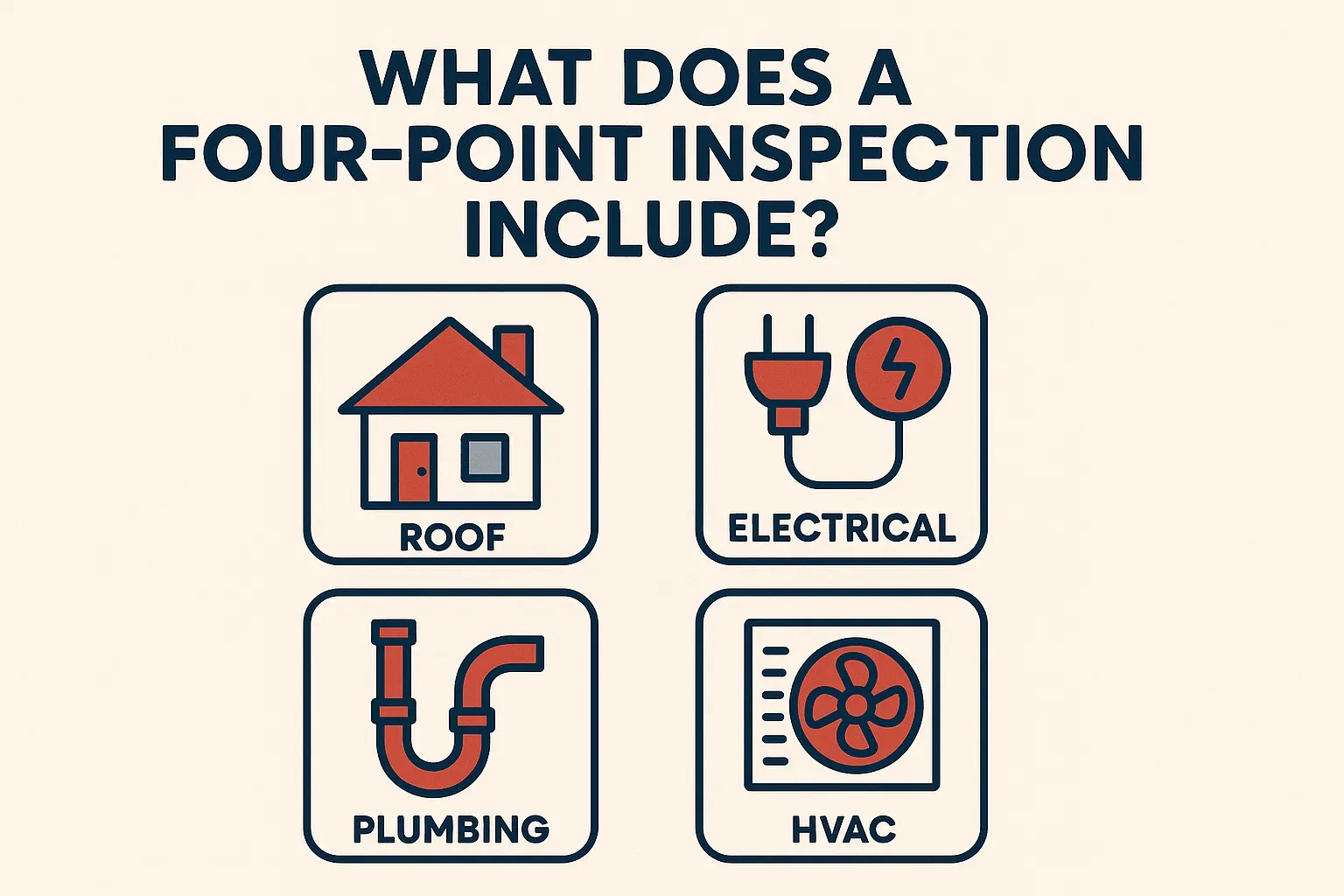
A four-point inspection includes a detailed assessment of four key systems within a home: roofing, electrical, plumbing, and HVAC (heating, ventilation, and air conditioning). This type of inspection is not as comprehensive as a full home inspection, but it is designed to give insurance companies the information they need to evaluate risk in older homes—typically those that are 15 years or older. Each component is reviewed to determine its condition, age, remaining lifespan, and any potential safety hazards that may affect a home’s insurability.
- Roofing System:
Inspectors examine the type of roof covering (shingles, metal, tile, etc.), the installation date, signs of damage or deterioration, previous repairs, and whether there are any active leaks. A roof near or past the end of its life expectancy may lead to insurance denial unless replaced. - Electrical System:
This section evaluates the type of wiring used (e.g., aluminum or knob-and-tube), the condition of the breaker panel, visible safety hazards, and whether the system is properly grounded. Outdated or hazardous electrical components often trigger insurance concerns. - Plumbing System:
Inspectors identify the materials used in the pipes (copper, PVC, polybutylene, etc.), the condition of visible plumbing, and any signs of leaks or corrosion. Insurance companies often avoid covering homes with high-risk materials like polybutylene. - HVAC System:
The heating and cooling systems are checked for operational status, age, and visible signs of rust, leaks, or safety issues. Inoperable or unsafe units may require replacement to maintain insurance coverage.
This inspection helps insurance providers assess whether a property poses any risk that could lead to future claims. While it’s a limited inspection, it plays a critical role in determining if a home qualifies for new or renewed insurance policies—especially in regions like Florida, where insurer risk evaluations are stringent.
Who Pays for a 4-Point Inspection in Florida?
In Florida, the responsibility for paying for a 4-point inspection typically falls on the homeowner or the prospective buyer, depending on the situation. If you’re purchasing a home, especially an older one (usually 25 years or older), your insurance company may require a 4-point inspection before issuing or renewing a homeowners insurance policy.
In such cases, the buyer is usually expected to pay for the inspection as part of the due diligence process during the home-buying journey. However, if the homeowner is refinancing or updating their insurance policy, they will usually cover the cost themselves.
While some sellers may agree to pay for this inspection as part of the negotiation process, it is not a legal requirement for them to do so. Ultimately, who pays can depend on the specific agreement between the parties involved, but most often, it is considered the responsibility of the person seeking insurance coverage.
How Does a 4-Point Inspection Work in Florida?
In Florida, a 4-point inspection plays a vital role in determining whether a home—especially one that’s 25 years or older—meets the minimum requirements for homeowners insurance. Unlike a full home inspection, which reviews every aspect of a property, a 4-point inspection narrows the focus to four essential systems: roofing, electrical, plumbing, and HVAC (heating, ventilation, and air conditioning). Insurance providers rely on this report to evaluate the potential risks associated with insuring an older home, particularly in a state like Florida that is vulnerable to hurricanes and extreme weather.
The inspection is conducted by a licensed home inspector who will examine each of the four systems in detail. For the roof, the inspector checks the material type, age, visible damage, and estimated remaining life. For the electrical system, they look at the type of wiring (such as copper or aluminum), age and condition of the electrical panel, and the presence of outdated or dangerous components. During the plumbing inspection, they review the pipe materials (like PVC, galvanized steel, or polybutylene), inspect for visible leaks, and assess the age and safety of the water heater. Lastly, the HVAC system is evaluated to ensure it is functioning properly, free of damage, and has been adequately maintained.
After the inspection, a detailed report is prepared with findings and photographs for each area. This report is then submitted to the homeowner’s insurance company. If any of the systems are found to be outdated, unsafe, or in poor condition, the insurance provider may deny coverage or request that specific repairs be made before a policy can be approved or renewed. In Florida, this type of inspection is often required before purchasing insurance for homes over a certain age due to the increased risk of property damage from hurricanes, flooding, and wear and tear over time.
Conclusion
Understanding the role and cost of a 4-point inspection in Florida is essential for homeowners and buyers alike—especially when dealing with older properties that insurance companies scrutinize more closely. While the average cost ranges from $75 to $125, the value of this inspection goes far beyond the price tag. It provides a comprehensive look at the four systems most critical to a home’s safety and insurance eligibility: the roof, electrical, plumbing, and HVAC.
FAQS
1. Is a 4-point inspection the same as a full home inspection?
No, a 4-point inspection is not the same as a full home inspection. A full home inspection is a comprehensive review of the entire property, including the structure, exterior, interior, foundation, attic, insulation, and appliances. In contrast, a 4-point inspection only evaluates four specific systems: roofing, electrical, plumbing, and HVAC. While a full inspection is typically used during real estate transactions, a 4-point inspection is primarily used by insurance companies to assess risk for older homes in Florida.
2. Can a 4-point inspection fail?
Yes, a home can “fail” a 4-point inspection in the sense that an insurance company may deny coverage or require repairs before offering a policy. Common reasons include outdated or unsafe electrical panels, damaged roofs with limited remaining life, deteriorated plumbing materials like polybutylene, or an inoperable HVAC system. While the inspection itself doesn’t issue pass/fail grades, insurers use the report to determine insurability.
3. How long does a 4-point inspection take to complete?
On average, a 4-point inspection takes about 45 minutes to 1 hour, depending on the property’s size, layout, and condition of the four systems. For larger homes or properties with older infrastructure, it may take slightly longer. However, it’s significantly shorter than a full home inspection, which can take 2 to 4 hours.
4. Do I get a report after a 4-point inspection?
Yes, after the inspection, you’ll receive a written report, often within 24 to 48 hours. The report includes photos, notes, and checklists covering the four systems: roof, electrical, plumbing, and HVAC. It documents the age, materials, conditions, and any risks or deficiencies observed. This report is then submitted to your insurance provider for review.
5. Can I use a previous 4-point inspection report for a new insurance company?
Sometimes, yes. If the 4-point inspection was done within the last 12 months and there have been no significant changes to the home’s major systems, some insurance companies will accept the existing report. However, this depends on the insurer’s policies. If systems have aged or repairs have been made since the last inspection, a new one may be required.
6. Is it better to schedule a 4-point and wind mitigation inspection together?
Yes, scheduling both inspections together is often more cost-effective and convenient. Many inspectors offer bundled pricing, typically reducing the total cost. It also streamlines the insurance approval process by allowing you to submit all required documentation at once. Since both inspections are commonly requested for older homes in Florida, combining them saves time and ensures you meet all insurer requirements promptly.
Home Inspection Services Across Florida
PatriotInspect delivers certified, trusted, and location-specific inspection services across Southwest Florida and Miami-Dade County.
Four Point Inspection – Fort Myers
Insurance-focused inspection for roofing, plumbing, electrical, and HVAC systems.
Home Inspection – Fort Myers
Complete home inspection services for buyers, sellers, and homeowners.
Mold Inspection – Fort Myers
Professional mold inspections for moisture-related issues and indoor air quality.
Wind Mitigation – Fort Myers
Identify wind-resistant features that may help reduce insurance premiums.
Home Inspection – Cape Coral
Certified and trusted home inspections tailored for Cape Coral properties.
Four Point Inspection – Cape Coral
Insurance-required inspections for Florida homes.
Wind Mitigation – Cape Coral
Wind mitigation inspections to support insurance discounts.
Condo Inspection – Cape Coral
Focused inspections for condo units and shared systems.
Mold Inspection & Testing – Cape Coral
Advanced mold testing and inspection services.
Condo Inspection – Naples
Detailed condo inspections for Naples homeowners and buyers.
Four Point Inspection – Naples
Insurance-focused system inspections.
Mold Inspection & Testing – Naples
Humidity-related mold inspections and testing services.
Wind Mitigation – Naples
Wind-resistant feature verification for insurance savings.
Home Inspection – Bonita Springs
Comprehensive inspections for buyers and sellers.
Four Point Inspection – Bonita Springs
Insurance-required inspection for key home systems.
Wind Mitigation – Bonita Springs
Wind mitigation reports to help lower insurance costs.
Mold Inspection & Testing – Bonita Springs
Mold detection and moisture assessment services.
Condo Inspection – Bonita Springs
Specialized condo inspections for interior systems.
Home Inspection – Marco Island
Full property inspections for coastal homes.
Four Point Inspection – Marco Island
System-focused inspections for insurance needs.
Wind Mitigation – Marco Island
Storm-resistance inspections for coastal properties.
Condo Inspection – Marco Island
Condo inspections focused on unit-specific systems.
Mold Testing – Marco Island
Professional mold testing for indoor air quality concerns.
Radon Testing – Marco Island
Accurate radon testing for long-term health protection.
Home Inspection – Miami-Dade County
Trusted home inspection services across Miami-Dade County.
Four Point Inspection – Miami-Dade County
Insurance-focused inspections for key home systems.
Mold Inspection & Testing – Miami-Dade County
Mold detection services for humid environments.
Condo Inspection – Miami-Dade County
Certified condo inspections for urban and coastal properties.
Find Patriot's answers first in Google: make patriotinspect.com a preferred source.