Laboratory testing is the most scientific and reliable part of any professional mold inspection. It involves sending collected samples to an accredited laboratory where trained mycologists and microbiologists analyze them to identify the exact types of mold, spore counts, and concentration levels. In high-humidity coastal areas like Naples, Florida, this step is especially critical because mold often hides behind walls, in HVAC systems, attics, crawl spaces, or under flooring for years.
Lab testing goes far beyond visual inspection by providing concrete evidence of airborne spores, toxic species (such as Stachybotrys – black mold), and overall indoor air quality issues. For pre-purchase home buyers, these results serve as powerful documentation to negotiate repairs, price reductions, seller credits, or even contract termination. Results typically arrive within 24 hours to 5 days and become valuable records for insurance companies, health professionals, and future property resale.
Without laboratory confirmation, a mold inspection remains incomplete, especially in Florida’s storm-prone and humid climate where new moisture problems can appear after heavy rains or hurricanes. This testing can save buyers thousands of dollars in unexpected remediation costs while protecting family health from long-term exposure risks. Only certified mold inspectors collect samples properly to ensure results are accurate and legally defensible. In summary, laboratory testing gives buyers the confidence and clarity needed for a safe and informed home purchase in Naples, FL
How Mold Samples Are Collected for Laboratory Testing
During a professional mold inspection Naples fl, the inspector collects samples using three primary methods that are then sent to an accredited lab. The most common is air sampling, performed with specialized spore trap devices such as Air-O-Cell or Allergenco-D cassettes. These devices capture airborne mold spores from both indoor and outdoor air for direct comparison. The second method is surface sampling, which includes adhesive tape lifts, sterile swabs, or brush samples taken from visible or suspected mold growth areas.
The third method is bulk sampling, where a small piece of affected material (drywall, insulation, wood, or carpet) is removed and sent to the lab. Each sample is carefully labeled, sealed, and accompanied by a chain-of-custody form to prevent tampering and ensure traceability. In Naples, most inspectors collect 2–4 air samples plus several surface samples due to the region’s chronic humidity and frequent hidden moisture issues. During sampling, inspectors also record room dimensions, ventilation conditions, recent weather events, and property history to help with accurate interpretation.
Step-by-Step Analysis of Samples in the Laboratory
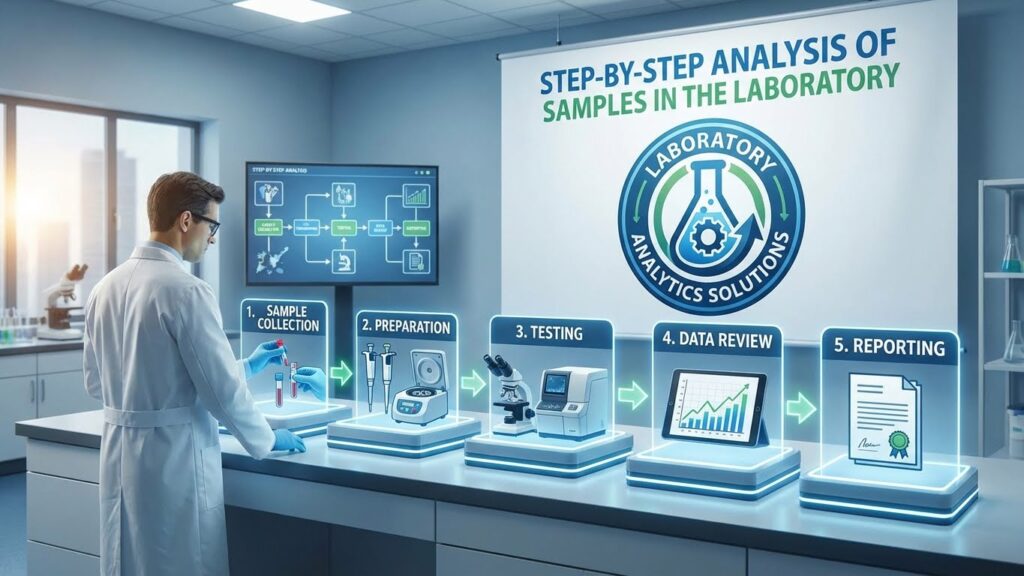
- Once samples reach the accredited laboratory, they are first logged in and checked for proper condition.
- The primary analysis method is direct microscopy (usually phase contrast microscopy), where spores are examined under a high-powered microscope to identify genus/species and count total spores.
- This method detects both viable (live) and non-viable (dead) spores quickly.
- For more detailed identification of live, growing mold, culturing is performed by placing samples on agar plates to grow colonies over several days. In advanced cases, PCR (DNA-based) testing may be used for extremely precise species identification.
- The entire direct microscopy process typically takes 24–72 hours, while culturing may require 3–7 days.
- The final lab report includes spore counts per cubic meter, indoor vs. outdoor comparisons, specific mold types, and health risk assessments.
Purpose of Laboratory Testing in Mold Inspection
The main purpose of laboratory testing is to identify mold species and evaluate spore levels that are not visible to the naked eye. Mold can exist behind walls, under flooring, or within HVAC systems, making lab testing essential for hidden contamination. Testing results help inspectors distinguish between normal background spore levels and abnormal mold amplification that requires remediation.
Types of Samples Sent to Laboratories
During mold testing naples fl, inspectors collect different types of samples depending on the situation. Air samples measure airborne mold spores and are useful for assessing indoor air quality. Surface samples, such as swabs or tape lifts, are collected from visible mold growth or suspected areas to identify specific mold species. In some cases, bulk samples from building materials are also tested to evaluate contamination depth.
Sample Handling and Chain of Custody
Once samples are collected, they are carefully sealed, labeled, and documented to maintain integrity. Proper chain of custody procedures ensure that samples are not contaminated or altered before reaching the laboratory. Each sample is logged with detailed information, including location, collection method, and environmental conditions, which helps laboratory analysts produce accurate and defensible results.
Laboratory Analysis Methods
Accredited laboratories use advanced microscopy and analytical techniques to examine mold samples. Air samples are analyzed to determine spore counts per cubic meter and identify mold genera present. Surface samples are examined to confirm mold growth and classify species. In specialized cases, laboratories may use culture analysis or molecular testing to detect specific or toxigenic molds.
Interpreting Laboratory Test Results
Laboratory reports provide detailed data, including mold types, spore concentrations, and comparisons between indoor and outdoor samples. Professional mold inspectors interpret these results to determine whether mold levels are normal or elevated. The findings help identify moisture sources, assess health risks, and guide the scope of remediation if needed.
Importance of Laboratory Testing Accuracy
- Accurate laboratory testing ensures that mold problems are neither overlooked nor misdiagnosed. Reliable results prevent unnecessary remediation costs while ensuring that genuine mold issues are addressed properly.
- This accuracy is especially important during real estate transactions, insurance claims, and post-remediation verification.
Role of Laboratory Testing in Mold Remediation Planning
Laboratory testing results serve as a foundation for developing effective mold remediation plans. By identifying the type and extent of mold contamination, professionals can select appropriate cleanup methods and containment strategies. Post-remediation testing further confirms that mold levels have returned to acceptable conditions, ensuring a safe and healthy indoor environment.
How Laboratory Testing Results Are Interpreted
A certified mold inspector carefully reviews and interprets the lab report. The first step is comparing indoor spore levels to outdoor levels—if indoor counts are significantly higher, it strongly indicates active indoor mold growth. Next, the specific mold species are evaluated because some (like Stachybotrys or Aspergillus) are more toxic and pose greater health risks.
The report also shows the percentage of allergenic, pathogenic, or non-problematic spores. The inspector considers the property’s size, ventilation quality, previous water damage history, and local climate conditions. In Naples’ humid environment, slightly elevated indoor levels can be normal, but counts 2–5 times higher than outdoor levels usually signal a serious problem. This professional interpretation turns raw data into actionable information and creates a strong negotiation document for buyers.
Common Mold Findings from Laboratory Testing in Naples, Fl
In Naples homes, laboratory testing frequently detects elevated levels of Aspergillus, Cladosporium, Penicillium, and occasionally Stachybotrys. HVAC systems and evaporator coils often show high spore counts due to condensation issues. Bathrooms and kitchens commonly have increased levels from poor ventilation, while attics and crawl spaces frequently reveal growth from past roof leaks or inadequate airflow.
Reference Table: Common Mold Types Detected in Laboratory Testing – Naples, FL
| Mold Type | Common Locations in Home | Health Effects | Typical Spore Count (per m³) | Risk Level | Estimated Remediation Cost |
| Aspergillus | HVAC ducts, bathrooms, attics | Allergies, asthma, respiratory infections | 800 – 8,000+ | High | $1,500 – $6,000 |
| Cladosporium | Windows, exterior walls, AC units | Hay fever, skin & eye irritation | 500 – 12,000 | Medium | $800 – $3,000 |
| Penicillium | Water-damaged drywall, carpets | Allergic reactions, headaches | 400 – 5,000 | Medium | $1,200 – $4,500 |
| Stachybotrys (Black Mold) | Behind walls, crawl spaces, basements | Severe – neurological & immune issues | 100 – 2,000+ | Very High | $5,000 – $25,000+ |
| Alternaria | Showers, kitchens, outdoor intrusion | Asthma triggers, allergic reactions | 200 – 4,000 | Medium | $700 – $2,500 |
| Chaetomium | Water-damaged paper, drywall, wood | Musty odors, chronic allergies | 300 – 3,500 | High | $2,000 – $8,000 |
Important Limitations of Laboratory Testing
While laboratory testing is highly accurate, it has some limitations. It only analyzes the specific areas from which samples were collected—if mold exists in completely inaccessible or unsampled locations, it may be missed without destructive testing.
Mold spore levels can fluctuate with weather, seasons, humidity changes, or recent rain events. Sampling represents only a small portion of the air or surface at one moment in time, so it cannot provide a 100% guarantee of a mold-free environment forever. Proper interpretation requires an experienced, certified professional to avoid misreading normal vs. problematic levels.
Frequently Asked Questions (FAQs)
1. What is laboratory testing in mold inspection and testing?
Laboratory testing is the scientific analysis of samples collected during a mold inspection. These samples may include air, surface, or material samples. The goal is to identify mold types and measure spore concentrations. It helps confirm mold presence that cannot be seen visually. This process ensures accurate and reliable inspection results.
2. Why is laboratory testing necessary during mold inspections?
Laboratory testing provides proof of mold conditions beyond visual signs. Mold spores are often invisible and airborne. Testing helps differentiate between normal background spores and problematic mold levels. It prevents incorrect assumptions and unnecessary remediation. This step increases confidence in inspection findings.
3. What types of samples are used for mold laboratory testing?
Inspectors collect air samples to measure airborne mold spores. Surface samples are taken from visible or suspected mold areas. Bulk samples may be removed from drywall, wood, or insulation. Each sample type provides different information. Together, they give a complete picture of mold conditions.
4. How are air samples analyzed in mold laboratories?
Air samples are examined under microscopes to identify mold spores. Laboratories calculate spore counts per cubic meter of air. Indoor samples are often compared with outdoor samples. This comparison helps detect abnormal indoor mold levels. The results help assess indoor air quality accurately.
5. What information does a mold laboratory report include?
A laboratory report lists mold types and spore concentrations. It includes sample locations and testing methods used. Reports may compare indoor and outdoor results. Inspectors use this data to explain risks. The report supports remediation or clearance decisions.
6. Can laboratory testing identify harmful or toxic mold?
Laboratory testing can identify mold genera associated with health risks. While not all mold is toxic, some types require attention. Results help assess potential health concerns. Inspectors use this information to prioritize remediation. This protects occupants and property value.
7. How long does it take to receive mold lab results?
Most mold laboratories provide results within 24 to 72 hours. Turnaround time depends on the type of testing performed. Expedited services may be available for urgent cases. Fast results support timely decision-making. This is important for real estate and insurance needs.
8. Is laboratory testing required after mold remediation?
Post-remediation laboratory testing is often recommended. It confirms that mold levels have returned to acceptable conditions. This process is known as clearance testing. It verifies remediation success. Many buyers and insurers require this confirmation.
9. Who interprets mold laboratory testing results?
Mold laboratory results should be reviewed by trained professionals. Inspectors analyze data alongside environmental conditions. Raw numbers alone can be misleading. Professional interpretation ensures accurate conclusions. This helps property owners make informed decisions.
10. Does laboratory testing guarantee accurate mold detection?
Laboratory testing greatly improves accuracy when done correctly. Proper sample collection and handling are essential. Accredited laboratories follow standardized procedures. When combined with professional inspection, results are reliable. This approach minimizes errors and misdiagnosis.
Home Inspection Services Across Florida
PatriotInspect delivers certified, trusted, and location-specific inspection services across Southwest Florida and Miami-Dade County.
Four Point Inspection – Fort Myers
Insurance-focused inspection for roofing, plumbing, electrical, and HVAC systems.
Home Inspection – Fort Myers
Complete home inspection services for buyers, sellers, and homeowners.
Mold Inspection – Fort Myers
Professional mold inspections for moisture-related issues and indoor air quality.
Wind Mitigation – Fort Myers
Identify wind-resistant features that may help reduce insurance premiums.
Home Inspection – Cape Coral
Certified and trusted home inspections tailored for Cape Coral properties.
Four Point Inspection – Cape Coral
Insurance-required inspections for Florida homes.
Wind Mitigation – Cape Coral
Wind mitigation inspections to support insurance discounts.
Condo Inspection – Cape Coral
Focused inspections for condo units and shared systems.
Mold Inspection & Testing – Cape Coral
Advanced mold testing and inspection services.
Condo Inspection – Naples
Detailed condo inspections for Naples homeowners and buyers.
Four Point Inspection – Naples
Insurance-focused system inspections.
Mold Inspection & Testing – Naples
Humidity-related mold inspections and testing services.
Wind Mitigation – Naples
Wind-resistant feature verification for insurance savings.
Home Inspection – Bonita Springs
Comprehensive inspections for buyers and sellers.
Four Point Inspection – Bonita Springs
Insurance-required inspection for key home systems.
Wind Mitigation – Bonita Springs
Wind mitigation reports to help lower insurance costs.
Mold Inspection & Testing – Bonita Springs
Mold detection and moisture assessment services.
Condo Inspection – Bonita Springs
Specialized condo inspections for interior systems.
Home Inspection – Marco Island
Full property inspections for coastal homes.
Four Point Inspection – Marco Island
System-focused inspections for insurance needs.
Wind Mitigation – Marco Island
Storm-resistance inspections for coastal properties.
Condo Inspection – Marco Island
Condo inspections focused on unit-specific systems.
Mold Testing – Marco Island
Professional mold testing for indoor air quality concerns.
Radon Testing – Marco Island
Accurate radon testing for long-term health protection.
Home Inspection – Miami-Dade County
Trusted home inspection services across Miami-Dade County.
Four Point Inspection – Miami-Dade County
Insurance-focused inspections for key home systems.
Mold Inspection & Testing – Miami-Dade County
Mold detection services for humid environments.
Condo Inspection – Miami-Dade County
Certified condo inspections for urban and coastal properties.