When purchasing or maintaining a condominium, one of the most important steps is the condo inspection. Among the key areas evaluated are the interior walls, ceilings, and flooring. These components are not only critical for structural integrity and safety but also for identifying hidden issues that may affect comfort, air quality, and long-term maintenance costs.
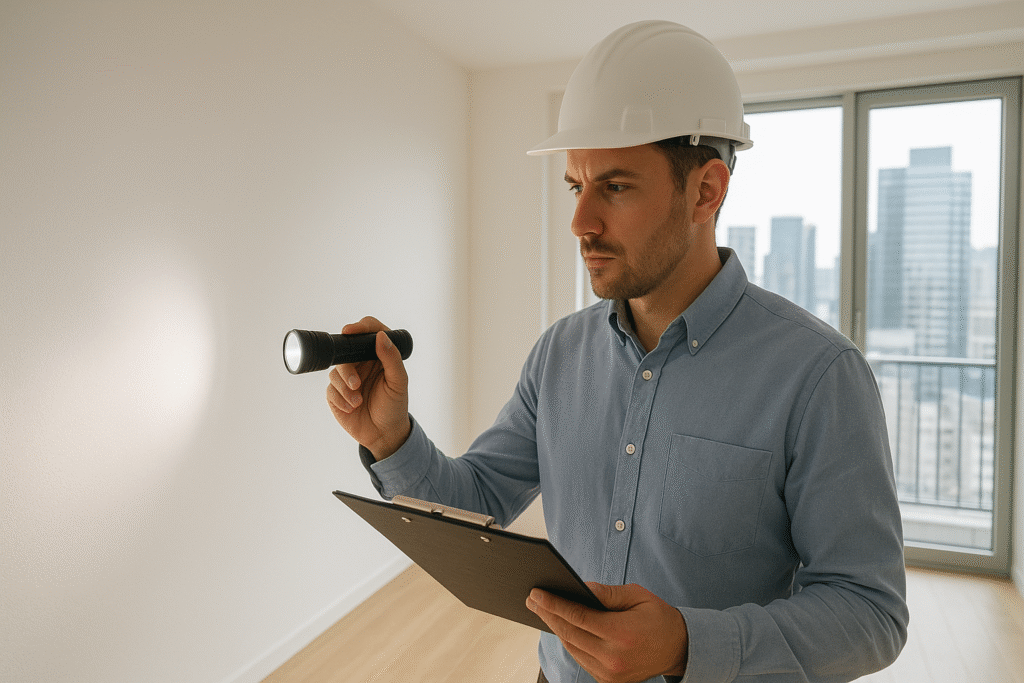
1. Importance of Inspecting Interior Walls, Ceilings, and Flooring
A detailed inspection of a condo’s interior surfaces helps uncover underlying issues that may not be immediately visible. These elements often reveal early signs of water damage, foundation movement, or even mold growth.
Key Reasons Why These Inspections Matter
- Detect water intrusion from plumbing or roofing leaks.
- Identify cracks that could indicate settling or structural movement.
- Uncover mold or mildew growth behind walls or ceilings.
- Assess cosmetic and functional conditions for future renovation planning.
- Determine compliance with fire safety standards, such as fire-rated walls between units.
2. What Inspectors Look for in Each Area
A professional condo inspector follows a checklist when evaluating interior finishes. Below is a detailed breakdown of what’s assessed in walls, ceilings, and flooring.
Table: Condo Interior Inspection Checklist
| Area | Inspection Focus | Common Issues Found | Tools Used |
|---|---|---|---|
| Walls | Cracks, moisture, insulation, paint condition | Water stains, drywall cracks, peeling paint, mold | Moisture meter, infrared camera |
| Ceilings | Structural integrity, sagging, water damage | Discoloration, sagging, leaks, cracks near joints | Flashlight, ladder, thermal scanner |
| Flooring | Leveling, moisture, material wear | Uneven surfaces, soft spots, damaged tiles or wood | Level tool, moisture tester |
3. Detailed Inspection Steps
a. Walls
Inspectors look for:
- Cracks running diagonally or horizontally (possible structural issues).
- Bubbling or flaking paint (signs of moisture).
- Mold growth, especially near bathrooms or kitchens.
- Damaged drywall or plaster from previous repairs.
- Gaps between trim and walls (potential shifting).
If moisture is detected, inspectors may recommend further evaluation with an infrared camera or mold testing.
b. Ceilings
Ceiling issues can indicate roof leaks or plumbing failures from the condo unit above.
Inspectors examine:
- Stains or discoloration patches.
- Sagging or bowing areas (possible water saturation).
- Cracks near light fixtures or air vents.
- Inadequate ventilation or insulation causing condensation.
Ceilings in multi-story condos are also checked for fire separation and soundproofing compliance.
c. Flooring
Flooring materials often reveal the condition of the subfloor or foundation underneath.
Inspectors assess:
- Loose or creaky floorboards.
- Tiles lifting or grout cracking.
- Carpet moisture or odor (indicating leaks or pet damage).
- Uneven or sloping floors.
If the inspector finds high moisture levels, it may indicate plumbing leaks, condensation, or previous flooding.
4. Common Problems Found During Condo Inspections
| Issue | Possible Cause | Recommended Action |
|---|---|---|
| Wall cracks | Structural settling or thermal expansion | Monitor or consult a structural engineer |
| Ceiling stains | Plumbing or roof leak | Repair source of leak and replace damaged drywall |
| Peeling paint | Poor ventilation or moisture | Improve airflow and repaint with mold-resistant coating |
| Mold growth | Hidden leaks or humidity | Professional mold remediation |
| Uneven flooring | Subfloor damage or foundation shift | Repair or replace damaged sections |
5. Who Is Responsible for Repairs in a Condo?
In condominiums, responsibility for repairs can depend on the Condo Association’s bylaws.
Generally:
| Component | Owner’s Responsibility | Association’s Responsibility |
|---|---|---|
| Interior paint and finishes | Yes | No |
| Interior drywall surface | Yes | No |
| Structural walls between units | No | Yes |
| Flooring inside unit | Yes | No |
| Ceiling leaks from above unit | Sometimes | Shared responsibility |
Always review the Condominium Declaration and Bylaws before assuming responsibility for repair costs.
6. Tips for Buyers and Owners
Before Buying a Condo
- Hire a certified condo inspector with experience in multi-unit properties.
- Ask for a full inspection report including infrared and moisture readings.
- Check for recent repairs or insurance claims.
For Current Condo Owners
- Inspect walls, ceilings, and flooring annually for early signs of damage.
- Keep humidity below 50% to prevent mold growth.
- Address leaks immediately and document any damage for HOA communication.
7. Additional Inspections to Consider
When inspecting a condo, it’s smart to include other relevant evaluations:
- Electrical System Inspection – to ensure wiring and panels meet code.
- HVAC System Check – for airflow, ductwork, and filter condition.
- Plumbing Inspection – for pipe leaks, pressure issues, and drainage.
- Mold and Moisture Testing – especially if musty odors or stains are present.
- Wind Mitigation (for Florida and coastal states) – to assess storm resistance.
8. Sample Condo Interior Condition Rating Table
| Condition Rating | Description | Recommended Action |
|---|---|---|
| Excellent | No visible issues, newly renovated | Maintain regular cleaning and inspection |
| Good | Minor cosmetic wear | Repaint or reseal as needed |
| Fair | Noticeable cracks, fading, or minor leaks | Repair and monitor |
| Poor | Significant damage, moisture, or mold | Full repair or replacement recommended |
9. Frequently Asked Questions (FAQs)
1. What is included in a condo inspection?
A condo inspection typically includes the evaluation of electrical systems, plumbing, HVAC, appliances, windows, walls, ceilings, flooring, and visible structural components.
2. How do inspectors check for moisture behind walls?
Inspectors use moisture meters and infrared cameras to detect temperature differences and hidden water damage behind walls or ceilings.
3. Should I inspect a newly built condo?
Yes. Even new condos can have hidden construction defects, poor sealing, or insulation issues that should be addressed before move-in.
4. How much does a condo interior inspection cost?
Costs vary by location and unit size but typically range between $250 to $500 for a standard condo inspection.
5. What if my ceiling shows a water stain?
A ceiling stain usually indicates a leak from above. The inspector will trace the source, and you should report it to your HOA if it involves shared infrastructure.
6. Can mold hide behind walls and ceilings?
Yes. Mold can grow behind drywall or ceiling panels if there’s persistent moisture. Professional testing is recommended if odors or stains are detected.
Conclusion
A thorough condo inspection focusing on interior walls, ceilings, and flooring is essential for identifying both visible and hidden issues that could lead to costly repairs. Whether you’re a buyer or a current owner, regular inspections help maintain your property’s safety, comfort, and value.
By understanding what inspectors look for and how to address common issues, you can protect your investment and ensure a healthy living environment.
Home Inspection Services Across Florida
PatriotInspect delivers certified, trusted, and location-specific inspection services across Southwest Florida and Miami-Dade County.
Four Point Inspection – Fort Myers
Insurance-focused inspection for roofing, plumbing, electrical, and HVAC systems.
Home Inspection – Fort Myers
Complete home inspection services for buyers, sellers, and homeowners.
Mold Inspection – Fort Myers
Professional mold inspections for moisture-related issues and indoor air quality.
Wind Mitigation – Fort Myers
Identify wind-resistant features that may help reduce insurance premiums.
Home Inspection – Cape Coral
Certified and trusted home inspections tailored for Cape Coral properties.
Four Point Inspection – Cape Coral
Insurance-required inspections for Florida homes.
Wind Mitigation – Cape Coral
Wind mitigation inspections to support insurance discounts.
Condo Inspection – Cape Coral
Focused inspections for condo units and shared systems.
Mold Inspection & Testing – Cape Coral
Advanced mold testing and inspection services.
Condo Inspection – Naples
Detailed condo inspections for Naples homeowners and buyers.
Four Point Inspection – Naples
Insurance-focused system inspections.
Mold Inspection & Testing – Naples
Humidity-related mold inspections and testing services.
Wind Mitigation – Naples
Wind-resistant feature verification for insurance savings.
Home Inspection – Bonita Springs
Comprehensive inspections for buyers and sellers.
Four Point Inspection – Bonita Springs
Insurance-required inspection for key home systems.
Wind Mitigation – Bonita Springs
Wind mitigation reports to help lower insurance costs.
Mold Inspection & Testing – Bonita Springs
Mold detection and moisture assessment services.
Condo Inspection – Bonita Springs
Specialized condo inspections for interior systems.
Home Inspection – Marco Island
Full property inspections for coastal homes.
Four Point Inspection – Marco Island
System-focused inspections for insurance needs.
Wind Mitigation – Marco Island
Storm-resistance inspections for coastal properties.
Condo Inspection – Marco Island
Condo inspections focused on unit-specific systems.
Mold Testing – Marco Island
Professional mold testing for indoor air quality concerns.
Radon Testing – Marco Island
Accurate radon testing for long-term health protection.
Home Inspection – Miami-Dade County
Trusted home inspection services across Miami-Dade County.
Four Point Inspection – Miami-Dade County
Insurance-focused inspections for key home systems.
Mold Inspection & Testing – Miami-Dade County
Mold detection services for humid environments.
Condo Inspection – Miami-Dade County
Certified condo inspections for urban and coastal properties.