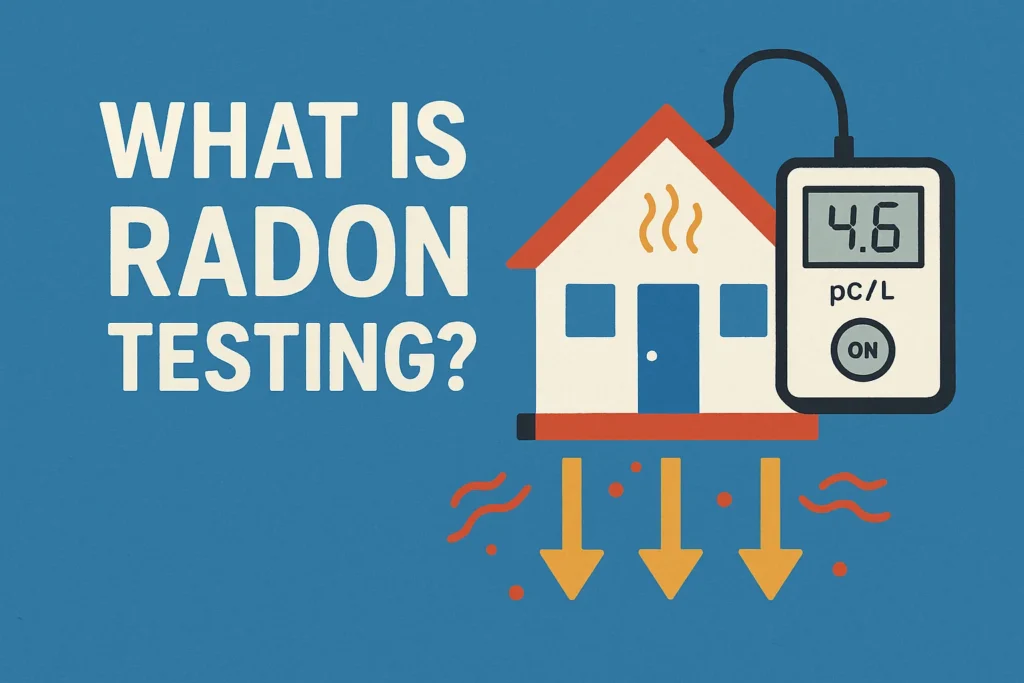
Radon testing is the process of detecting and measuring radon gas levels in homes, buildings, or any enclosed environment. Radon is a naturally occurring, radioactive gas that is colorless, odorless, and tasteless—making it impossible to detect without specialized equipment. It is produced from the natural breakdown of uranium found in soil, rock, and water. As radon gas escapes from the ground, it can enter homes through cracks in the foundation, walls, floors, or even through well water.
Since prolonged exposure to elevated radon levels can lead to serious health risks—particularly lung cancer—testing for radon has become a critical part of home safety, real estate transactions, and environmental assessments.
In this comprehensive guide, we’ll explore the sources of radon, the health implications, what is radon testing, how radon testing works, the types of tests available, how to interpret results, and what actions to take if radon levels are high. We will also discuss professional radon mitigation solutions, relevant guidelines from health organizations, and the benefits of early detection.
Understanding Your Radon Test Results
Interpreting your radon test results is a crucial step in protecting your home and family from long-term health risks. Radon levels are measured in picocuries per liter (pCi/L) of air. According to the Environmental Protection Agency (EPA), any reading of 4.0 pCi/L or higher is considered a serious health risk and requires prompt action through radon mitigation.
However, levels between 2.0 and 3.9 pCi/L are not risk-free—especially for children, the elderly, or smokers—and should still be addressed with precautionary measures. A reading below 2.0 pCi/L is generally considered safe, but the EPA still recommends retesting every two years, as radon levels can change with seasons, structural shifts, or home renovations.
The accuracy of your results can also depend on the type and duration of the test. Short-term tests, which last from 2 to 7 days, may fluctuate due to weather or ventilation patterns, offering only a temporary snapshot of radon levels. Long-term tests, spanning over 90 days, provide a more reliable average that accounts for environmental changes.
If a short-term test shows elevated levels, it’s wise to confirm the findings with a long-term test before installing a mitigation system. Understanding what your radon test results mean allows you to make informed decisions to ensure a safe, breathable indoor environment.
When to Conduct a Radon Test?
Conducting a radon test is essential for ensuring indoor air safety, and knowing the right time to perform this test can make the results more reliable and actionable. Ideally, you should test for radon when moving into a new home, whether you’re buying or renting.
It’s also wise to test if your home has never been tested before, or if it’s been more than two years since the last test. Major renovations, especially those involving basements, ventilation, or sealing foundations, can alter how radon enters a building, making post-renovation testing important.
Additionally, radon levels fluctuate seasonally—typically higher in colder months when windows are closed and ventilation is limited—so testing during the fall or winter is recommended for more accurate worst-case readings. If you live in a high-risk radon zone or use well water, annual or biannual testing is encouraged.
Finally, testing is often required during real estate transactions, either by lenders, buyers, or state regulations, to ensure the property meets health and safety standards before a deal is finalized.
What Homes Are at a Higher Risk for Radon?
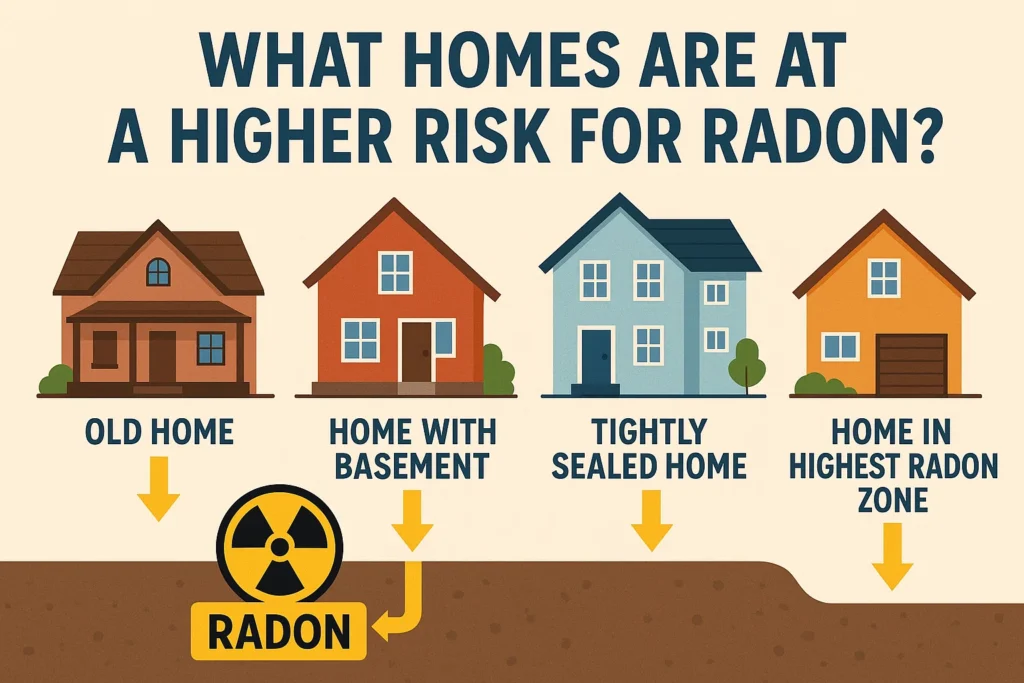
While any home can have a radon problem, certain types of homes and locations are at higher risk due to their structural features, soil composition, and geographic region. One of the biggest risk factors is geographic location.
Homes built in areas with uranium-rich soil or rock formations—common in parts of the Midwest, Northeast, and mountainous regions—tend to have higher radon levels. However, even homes in traditionally low-risk zones can show elevated readings due to soil variations or improper construction practices.
The foundation type also plays a significant role. Homes with basements, crawl spaces, or slab-on-grade foundations are particularly vulnerable because these features provide more direct contact with the soil. Cracks in the basement floor, gaps in foundation walls, or openings around plumbing and wiring can serve as entry points for radon gas.
Additionally, tightly sealed, energy-efficient homes may inadvertently trap radon indoors, causing levels to rise over time due to poor ventilation.
Other high-risk scenarios include older homes with unsealed foundations, homes built on fill dirt or disturbed soil, and houses located near mines, granite deposits, or fault lines.
Even newly constructed homes can be at risk if radon-resistant features weren’t included during building. Because radon cannot be detected by human senses and varies greatly from house to house—even next-door neighbors may have different readings—testing is the only reliable way to determine your home’s risk.
Why It’s Important to Test for Radon?
Testing for radon is a vital health precaution that often goes overlooked because this harmful gas is invisible, odorless, and tasteless, making it impossible to detect without specialized equipment. Despite its elusive nature, radon is one of the leading causes of lung cancer, second only to smoking. The Environmental Protection Agency (EPA) estimates that radon is responsible for over 21,000 lung cancer deaths each year in the United States alone. What makes radon particularly dangerous is its ability to accumulate silently over time in homes, schools, and workplaces—especially in enclosed areas like basements or poorly ventilated spaces.
Without testing, there’s no way to know whether you’re breathing in this carcinogenic gas daily. Even homes that are new, well-sealed, or located in low-risk zones can have elevated radon levels due to variations in soil composition and structural design. Additionally, radon levels can fluctuate with the seasons, weather, and home renovations. Routine testing is the only way to confirm your indoor air quality and take timely action if levels exceed the EPA’s safety threshold of 4.0 pCi/L. For homebuyers, renters, or property owners, testing for radon ensures peace of mind and can also affect real estate transactions or insurance policies.
Ultimately, the importance of radon testing lies in its role as a preventive health measure. Early detection allows for simple, cost-effective solutions such as mitigation systems that can drastically reduce radon levels. By committing to regular testing, you’re not just protecting your property—you’re making a long-term investment in your health and safety.
When and How Often to Test for Radon?
Knowing when and how often to test for radon is key to maintaining a safe indoor environment. Radon levels can vary due to numerous factors—such as changes in the weather, season, or your home’s ventilation—so a single test is not enough to guarantee long-term safety. The Environmental Protection Agency (EPA) recommends testing for radon every two years, even if previous levels were low. If you’ve made significant renovations—especially in the basement, foundation, or ventilation systems—it’s crucial to test again, as these changes can affect how radon enters and accumulates in your home.
The best time to conduct a radon test is during the colder months, typically fall and winter, when doors and windows are closed. This creates the most accurate “worst-case scenario” because it mimics the conditions under which radon is most likely to build up indoors. Short-term tests, which run from 2 to 7 days, are useful for initial screening, while long-term tests, which last over 90 days, give a more accurate picture of average radon exposure over time. If you use a short-term test and get results at or above 4.0 pCi/L, the EPA suggests doing a follow-up test—either another short-term or a long-term one—for confirmation before taking mitigation action.
Additionally, you should always test for radon before buying or selling a home. Many real estate transactions now require radon disclosure or proof of acceptable levels. You should also test if you move to a new home, especially if it’s in a high-risk area or hasn’t been tested before. Regular testing is especially important for homes with basements, crawl spaces, or well water, as these conditions increase the likelihood of radon intrusion. By testing on a routine basis and after major structural changes, you ensure continuous protection for you and your family.
Is a Radon Test Required When Buying a Home?
A radon test is not federally required by law when buying a home in the United States, but it is strongly recommended—and in some states, it is required as part of a real estate transaction. While federal agencies like the Environmental Protection Agency (EPA) don’t mandate radon testing, they do urge buyers to test for it before closing a home purchase. This is because radon is a known carcinogen and can pose a serious long-term health risk if elevated levels are present in the home. Testing before the purchase can help buyers make informed decisions and negotiate repairs or mitigation with the seller.
Some states and municipalities do require sellers to disclose known radon levels or previous testing history. For example, in states like Illinois, Minnesota, and New Jersey, laws require radon disclosure during a home sale. However, even where disclosure is not legally required, many buyers include a radon contingency in their home inspection process. This means the buyer reserves the right to test for radon and either request mitigation or back out of the deal based on the results.
Real estate professionals and home inspectors often recommend conducting a short-term radon test during the due diligence or inspection period. If radon levels come back at or above 4.0 picocuries per liter (pCi/L), the EPA suggests that mitigation should be performed before the new owners move in. A typical radon mitigation system is relatively affordable and can lower radon to safe levels, providing peace of mind and added value to the property.
Ultimately, while not universally mandated, a radon test is a critical step in the home-buying process that protects your health and financial investment. Whether required by law or not, it is always in the buyer’s best interest to conduct a radon test before finalizing a purchase.
How Long Does a Radon Test Take?
The amount of time a radon test takes depends on the method used—short-term or long-term testing. A short-term radon test usually takes between 2 to 7 days, making it ideal for quick assessments, especially during real estate transactions. These tests use charcoal canisters, liquid scintillation detectors, or continuous radon monitors to capture data over a short window. Once the testing period ends, results can be available within a few days, especially if the device is sent to a laboratory for analysis or offers digital readings on the spot.
On the other hand, a long-term radon test spans 90 days or more, with some lasting up to a full year. This method provides a more accurate reading of the home’s average radon levels over time and accounts for seasonal and environmental changes. Long-term tests are typically recommended for homeowners seeking the most reliable measure of chronic exposure.
Regardless of which test you choose, the Environmental Protection Agency (EPA) recommends maintaining closed-house conditions—keeping windows and exterior doors shut—for at least 12 hours before and throughout the test period to ensure accurate results. Whether you’re in the process of buying a home or simply checking for health safety, understanding the time each test takes helps you plan appropriately.
What to Expect During Professional Radon Testing?
When you hire a certified radon professional to test your home or building, the process is generally straightforward, non-invasive, and focused on accuracy. Professional radon testing begins with a licensed technician visiting your property to evaluate the layout and determine the best location for the testing equipment—typically in the lowest livable area, such as a basement or ground-level room.
The specialist will place one or more EPA-approved continuous radon monitors (CRMs) or passive test kits and instruct you to maintain closed-house conditions for the duration of the test. This means keeping windows and exterior doors shut, except for normal entry and exit, for at least 12 hours before the test begins and throughout the testing period.
The test usually lasts 48 to 96 hours, depending on the device and environmental conditions. Continuous monitors record radon levels hour by hour, providing detailed data on fluctuations. The equipment is left undisturbed, and homeowners are advised not to move, cover, or tamper with it during the test. Once the testing period concludes, the radon professional returns to retrieve the device and analyze the results. You’ll receive a detailed report indicating the average radon level, hourly readings (if using a CRM), and an interpretation of whether the levels are within safe limits or require mitigation.
If radon levels are found to be 4.0 pCi/L or higher, the professional may recommend follow-up testing or proceed with outlining mitigation options, such as installing a radon reduction system. The entire process—from setup to receiving the report—typically takes less than a week and provides peace of mind through accurate, science-based results. Professional testing is especially beneficial during real estate transactions, after home renovations, or if you’ve never had your home tested before.
Conclusion
Radon testing is not just a precaution—it’s a crucial step in protecting the health and well-being of everyone living in a home or working in a building. As an invisible, odorless, and tasteless radioactive gas, radon poses a serious threat that often goes undetected without proper testing. Its connection to lung cancer, particularly among non-smokers, makes it one of the most dangerous indoor pollutants known today. Whether you’re purchasing a new property, renovating your existing home, or simply ensuring your family’s safety, testing for radon should never be overlooked.
FAQS
1. Can radon be present in water, and should I test it too?
Yes, radon can be present in groundwater—especially if your home uses a private well. While radon gas primarily enters homes through the soil, it can also dissolve in well water and be released into the air during everyday activities such as showering, dishwashing, or cooking. If you rely on a well water system, it’s advisable to test both the air and water for radon. The EPA recommends water testing if your air radon levels are high and your home uses water from an underground source.
2. What health symptoms might indicate radon exposure?
Radon exposure does not cause immediate symptoms, which is why it’s often called a silent killer. However, long-term exposure can lead to lung damage and eventually lung cancer. Symptoms usually appear after years of exposure and may include:
- Chronic cough
- Shortness of breath
- Chest pain
- Frequent respiratory infections
If you’re experiencing these symptoms and are a non-smoker, radon could be a potential cause—especially if you’ve never tested your home.
3. Can radon levels vary between different rooms in the same house?
Yes, radon levels can fluctuate from room to room, especially if certain areas of the house are closer to the ground or have poor ventilation. For instance, a basement or crawl space might have higher radon levels compared to upper floors. Rooms with cracks in the floor, exposed soil, or sump pumps may also show elevated readings. When testing, it’s important to place devices in lowest-livable spaces and areas that are frequently occupied.
4. Are DIY radon test kits reliable?
DIY radon test kits can be reliable if used correctly and according to the instructions. Many are EPA-approved and provide accurate readings, especially for short-term assessments. However, accuracy may be compromised due to improper placement, timing, or failure to maintain closed-house conditions. For the most precise results—especially in real estate transactions or health-sensitive cases—professional testing with continuous radon monitors (CRMs) is often recommended.
5. How much does a professional radon test typically cost?
The cost of a professional radon test usually ranges from $150 to $300, depending on your location, the type of equipment used, and whether it includes a detailed report. While this might seem like an added expense, it’s a small investment compared to the health risks of undetected radon exposure. Some state health departments or local environmental agencies may also offer low-cost or free test kits, particularly in high-risk zones.
Home Inspection Services Across Florida
PatriotInspect delivers certified, trusted, and location-specific inspection services across Southwest Florida and Miami-Dade County.
Four Point Inspection – Fort Myers
Insurance-focused inspection for roofing, plumbing, electrical, and HVAC systems.
Home Inspection – Fort Myers
Complete home inspection services for buyers, sellers, and homeowners.
Mold Inspection – Fort Myers
Professional mold inspections for moisture-related issues and indoor air quality.
Wind Mitigation – Fort Myers
Identify wind-resistant features that may help reduce insurance premiums.
Home Inspection – Cape Coral
Certified and trusted home inspections tailored for Cape Coral properties.
Four Point Inspection – Cape Coral
Insurance-required inspections for Florida homes.
Wind Mitigation – Cape Coral
Wind mitigation inspections to support insurance discounts.
Condo Inspection – Cape Coral
Focused inspections for condo units and shared systems.
Mold Inspection & Testing – Cape Coral
Advanced mold testing and inspection services.
Condo Inspection – Naples
Detailed condo inspections for Naples homeowners and buyers.
Four Point Inspection – Naples
Insurance-focused system inspections.
Mold Inspection & Testing – Naples
Humidity-related mold inspections and testing services.
Wind Mitigation – Naples
Wind-resistant feature verification for insurance savings.
Home Inspection – Bonita Springs
Comprehensive inspections for buyers and sellers.
Four Point Inspection – Bonita Springs
Insurance-required inspection for key home systems.
Wind Mitigation – Bonita Springs
Wind mitigation reports to help lower insurance costs.
Mold Inspection & Testing – Bonita Springs
Mold detection and moisture assessment services.
Condo Inspection – Bonita Springs
Specialized condo inspections for interior systems.
Home Inspection – Marco Island
Full property inspections for coastal homes.
Four Point Inspection – Marco Island
System-focused inspections for insurance needs.
Wind Mitigation – Marco Island
Storm-resistance inspections for coastal properties.
Condo Inspection – Marco Island
Condo inspections focused on unit-specific systems.
Mold Testing – Marco Island
Professional mold testing for indoor air quality concerns.
Radon Testing – Marco Island
Accurate radon testing for long-term health protection.
Home Inspection – Miami-Dade County
Trusted home inspection services across Miami-Dade County.
Four Point Inspection – Miami-Dade County
Insurance-focused inspections for key home systems.
Mold Inspection & Testing – Miami-Dade County
Mold detection services for humid environments.
Condo Inspection – Miami-Dade County
Certified condo inspections for urban and coastal properties.