If you’re a Florida homeowner, renter, or real estate investor, you’ve probably heard warnings about mold—especially given Florida’s hot, humid climate. Mold thrives in moisture-rich environments, and unfortunately, Florida fits the bill perfectly. Whether you’re concerned about indoor air quality, recent water damage, or musty smells, a mold inspection is a proactive step toward protecting your home and health.
So, how much is a mold inspection in Florida? On average, a standard mold inspection in Florida costs between $300 and $600, but prices can vary significantly depending on the size of the property, the type of inspection required, and whether testing is involved.
This comprehensive guide explores every aspect of mold inspection costs in Florida, breaking down factors, inspection types, pricing ranges, and tips to save money without compromising safety.
How to Prevent Mold in Your Florida Home?
Preventing mold in your Florida home is crucial due to the state’s humid, subtropical climate that creates ideal conditions for mold growth. Mold thrives in warm, moist environments, and without proper prevention, it can quickly spread through walls, ceilings, HVAC systems, and floors—causing both structural damage and health issues. Fortunately, with a combination of regular maintenance, moisture control, and proper ventilation, you can significantly reduce the risk of mold taking hold in your home.
The most important step in mold prevention is controlling indoor humidity. Ideally, you should keep humidity levels below 50%. Use dehumidifiers in damp areas such as basements, bathrooms, and laundry rooms, especially during the wet summer months. Installing exhaust fans in bathrooms and kitchens helps remove excess moisture from showers and cooking. In Florida, it’s also wise to use air conditioning consistently to regulate both temperature and humidity. Make sure your AC system is properly maintained, and clean or replace filters regularly to avoid microbial buildup.
Regular home maintenance plays a major role in mold prevention. Inspect your roof, walls, and plumbing for any leaks and repair them immediately. Water intrusion, even in small amounts, can become a breeding ground for mold within 24 to 48 hours. Keep gutters clean to prevent overflow and water damage around your foundation. It’s also important to inspect windows and doors for signs of condensation or poor sealing, which can allow moisture to enter your home. For homes in flood-prone areas, installing a sump pump or backflow valve can offer added protection.
Additionally, pay attention to proper ventilation in enclosed spaces like closets and attics. Avoid placing furniture directly against walls, which can trap moisture and limit air circulation. When storing items, especially in garages or sheds, avoid cardboard boxes, which can retain moisture and encourage mold growth. Opt for plastic storage bins with tight lids. If you live near the coast or in a high-risk flood zone, consider investing in mold-resistant materials such as anti-microbial drywall, paints, and flooring during renovations or construction.
Who Pays for Mold Inspection in Florida?
In Florida, the responsibility for paying for a mold inspection typically depends on the situation and the relationship between the parties involved. For homeowners, the cost of a mold inspection usually falls on the property owner, especially when there are visible signs of mold or recent water damage.
If you’re a home buyer, it’s generally your responsibility to pay for the mold inspection during the due diligence period—just like a home inspection—so you can assess any potential health or structural risks before finalizing the purchase. In rental properties, tenants may request mold testing if they suspect unhealthy conditions, but unless the mold is caused by landlord negligence (like a persistent roof leak), tenants may need to cover the initial inspection costs themselves.
However, if the inspection proves that mold resulted from the landlord’s failure to maintain the property, the landlord may be held liable for both inspection and remediation. In some cases, insurance companies may pay for mold inspections, but only if the mold is caused by a covered peril, such as a sudden plumbing leak. Always check your policy terms, lease agreement, or purchase contract to determine who is financially responsible.
In Need of a Mold Inspection in Orlando, Florida?
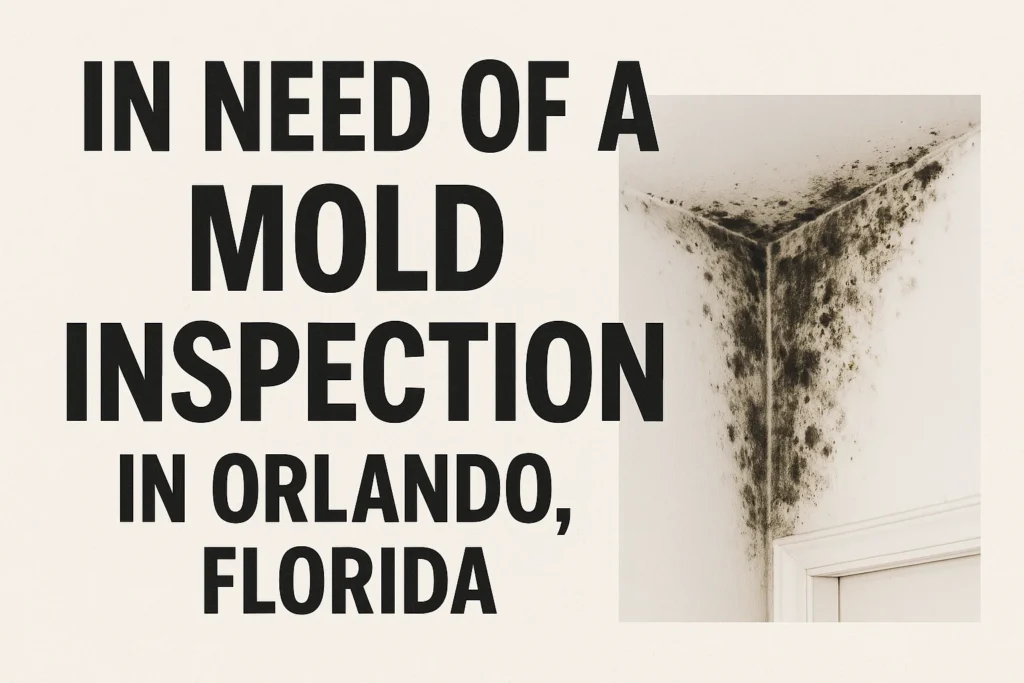
If you’re noticing musty odors, experiencing unexplained allergies, or have recently dealt with water damage, you may be in urgent need of a mold inspection in Orlando, Florida. With Orlando’s year-round humidity, heavy rains, and subtropical climate, homes and businesses in the region are especially vulnerable to mold growth. Whether you’re a homeowner, renter, or property investor, identifying mold early can prevent extensive structural damage, expensive repairs, and potential health risks associated with long-term exposure to mold spores.
Orlando mold inspections are best conducted by licensed and certified professionals who understand the unique challenges posed by Florida’s environment. These experts use tools such as infrared cameras, moisture meters, air sampling, and surface testing to detect mold—even when it’s hidden behind walls or under flooring. A thorough inspection will not only identify the presence of mold but also trace its source—be it a roof leak, plumbing issue, or poor ventilation. Once the problem is identified, you’ll receive a detailed report outlining the type, extent, and location of mold, along with recommended next steps for remediation if necessary.
Choosing the right mold inspector in Orlando means selecting someone who is Florida state-licensed, has positive customer reviews, and does not perform mold remediation themselves—ensuring an unbiased assessment. Mold inspections in Orlando typically cost between $300 and $600, depending on the size of your property and the complexity of the issue. Investing in a timely mold inspection protects not only your property’s value but also your family’s health. If you suspect mold in your home or are buying a property in Central Florida, don’t wait—schedule a professional mold inspection in Orlando today.
How Do I Become a Mold Inspector in Florida?
To become a mold inspector in Florida, you must meet specific state requirements set by the Florida Department of Business and Professional Regulation (DBPR). First, you must be at least 18 years old and hold a high school diploma or equivalent.
Then, you need to complete a state-approved training course focused on mold assessment practices, including moisture detection, sampling techniques, and safety protocols. After your training, you must pass a state-approved mold assessor examination to demonstrate your knowledge and competency.
Florida law also requires you to carry a minimum of $1 million in general liability insurance before you can apply for licensure. Once these steps are complete, you can submit your application, along with documentation and the required fee, to the DBPR for review. Upon approval, you will receive your official mold assessor license, allowing you to legally perform mold inspections across the state.
Do You Need a License to Do Mold Inspection in Florida?
Yes, in Florida, you do need a license to legally perform mold inspections. According to Florida Statutes Chapter 468, Part XVI, anyone who offers mold assessment or mold remediation services must hold a valid license issued by the Florida Department of Business and Professional Regulation (DBPR).
This requirement helps ensure that only qualified professionals with the proper education, training, and ethical standards perform mold-related evaluations. To become licensed, individuals must complete a state-approved training course, pass a licensing exam, and meet specific background and insurance requirements.
Performing mold inspections without a license in Florida is considered unlawful and can result in fines or legal action. Therefore, if you’re considering a career in mold assessment or planning to hire a mold inspector, it’s essential to verify that the professional holds a current Florida mold assessor license to ensure compliance and protect your health and property.
Requirements to Become a Licensed Mold Inspector in Florida?
To become a licensed mold inspector in Florida, individuals must meet specific education, training, and certification requirements established by the Florida Department of Business and Professional Regulation (DBPR). First, applicants must be at least 18 years old and possess a high school diploma or equivalent.
They are required to complete a state-approved mold assessment training program that includes both classroom instruction and hands-on field experience. This course typically covers topics like mold identification, sampling techniques, moisture intrusion, building science, and Florida mold laws.
After completing the training, candidates must pass the DBPR-approved mold assessment exam to demonstrate their knowledge and competency. In addition to passing the exam, applicants must submit a license application to the DBPR, undergo a background check, and carry a minimum of $1 million in general liability insurance with coverage for mold-related claims.
Meeting these requirements ensures that licensed mold inspectors in Florida are qualified to assess mold contamination safely and professionally in residential and commercial properties.
Can a General Contractor Do Mold Remediation in Florida?
In Florida, a general contractor cannot legally perform mold remediation unless they hold a separate mold remediation license issued by the Florida Department of Business and Professional Regulation (DBPR). The state has stringent regulations to ensure the safe and effective removal of mold due to the health hazards it poses.
While general contractors are licensed to handle a broad range of construction and renovation projects, they must obtain proper certification under Florida Statute 468.8411–468.8424 to engage in mold-related work. This includes passing an approved mold remediation course, meeting experience requirements, and holding proper insurance coverage.
Performing mold remediation without this specialized license can lead to penalties, fines, or license suspension. Therefore, homeowners and property managers should always verify whether a contractor holds the necessary mold remediation license before hiring them for any mold cleanup project in Florida.
Conclusion
In conclusion, while general contractors in Florida are skilled professionals capable of handling various construction tasks, they are not authorized to perform mold remediation without a proper license issued by the Florida Department of Business and Professional Regulation (DBPR). The state enforces these licensing laws to ensure that mold is handled by trained experts who understand the health implications and technical requirements of safe removal. Hiring an unlicensed contractor for mold remediation not only risks ineffective treatment but can also lead to legal complications and further damage to your property. To ensure safety, compliance, and peace of mind, always verify that the contractor you hire for mold cleanup in Florida holds the appropriate state-issued mold remediation license.
FAQS
1. What Does a Mold Inspection Typically Include in Florida?
A standard mold inspection in Florida typically includes a visual assessment of the property, moisture readings, humidity checks, and air or surface sampling if mold presence is suspected. Inspectors often use tools like thermal imaging cameras to detect hidden moisture behind walls or ceilings. The process usually concludes with a comprehensive report detailing findings, mold types (if testing was done), source identification, and recommendations for remediation if necessary. Some inspectors may also include a post-remediation verification service to confirm that mold has been successfully removed.
2. Is Mold Testing Always Part of a Mold Inspection in Florida?
Not necessarily. Mold testing (such as air or surface sampling) is optional and usually performed only when visible mold is not present or when the inspector needs to confirm the type or extent of contamination. Testing adds cost, often between $75 and $150 per sample. Homeowners with allergies or immune conditions may request testing even when mold is visible to determine specific spore types. Always discuss whether you need testing when booking your inspection, as it’s not automatically included in every service.
3. How Long Does a Mold Inspection Take in Florida Homes?
The average mold inspection in a Florida residential property takes about 1 to 2 hours, depending on the home’s size and complexity. Larger homes or those with known water damage issues may take longer, especially if testing is needed. Inspectors may spend additional time setting up and collecting samples, inspecting attics or crawlspaces, and identifying hidden moisture sources. A comprehensive report is usually delivered within 24 to 72 hours after the inspection.
4. Can I Stay in My House During a Mold Inspection in Florida?
Yes, you can typically remain in your home during a mold inspection, as the process is non-invasive and does not involve any hazardous chemicals or demolition. However, if mold is found and remediation is needed, temporary relocation might be necessary, especially in cases involving toxic black mold (Stachybotrys chartarum) or widespread contamination. Mold inspectors can advise you on safety recommendations based on the inspection results.
5. Are Mold Inspections Covered by Homeowners Insurance in Florida?
In Florida, most homeowners’ insurance policies do not cover mold inspections unless the mold is caused by a sudden and accidental event, such as a pipe burst or roof damage from a storm. Gradual leaks, poor maintenance, or humidity-related mold growth are typically excluded from coverage. It’s essential to review your policy and speak with your insurer to understand what’s included. Some companies offer mold endorsements for an additional premium.
6. When Is the Best Time of Year for a Mold Inspection in Florida?
Due to Florida’s consistently humid climate, mold inspections are relevant year-round. However, inspections tend to spike during and after the rainy season (May through October) when homes are more prone to leaks and flooding. Scheduling an inspection during these months—especially if you’ve experienced storms, roof leaks, or musty odors—can help catch mold early. Additionally, many homeowners schedule inspections before hurricane season as a preventive measure or after buying/selling a home to ensure the property is mold-free.
Home Inspection Services Across Florida
PatriotInspect delivers certified, trusted, and location-specific inspection services across Southwest Florida and Miami-Dade County.
Four Point Inspection – Fort Myers
Insurance-focused inspection for roofing, plumbing, electrical, and HVAC systems.
Home Inspection – Fort Myers
Complete home inspection services for buyers, sellers, and homeowners.
Mold Inspection – Fort Myers
Professional mold inspections for moisture-related issues and indoor air quality.
Wind Mitigation – Fort Myers
Identify wind-resistant features that may help reduce insurance premiums.
Home Inspection – Cape Coral
Certified and trusted home inspections tailored for Cape Coral properties.
Four Point Inspection – Cape Coral
Insurance-required inspections for Florida homes.
Wind Mitigation – Cape Coral
Wind mitigation inspections to support insurance discounts.
Condo Inspection – Cape Coral
Focused inspections for condo units and shared systems.
Mold Inspection & Testing – Cape Coral
Advanced mold testing and inspection services.
Condo Inspection – Naples
Detailed condo inspections for Naples homeowners and buyers.
Four Point Inspection – Naples
Insurance-focused system inspections.
Mold Inspection & Testing – Naples
Humidity-related mold inspections and testing services.
Wind Mitigation – Naples
Wind-resistant feature verification for insurance savings.
Home Inspection – Bonita Springs
Comprehensive inspections for buyers and sellers.
Four Point Inspection – Bonita Springs
Insurance-required inspection for key home systems.
Wind Mitigation – Bonita Springs
Wind mitigation reports to help lower insurance costs.
Mold Inspection & Testing – Bonita Springs
Mold detection and moisture assessment services.
Condo Inspection – Bonita Springs
Specialized condo inspections for interior systems.
Home Inspection – Marco Island
Full property inspections for coastal homes.
Four Point Inspection – Marco Island
System-focused inspections for insurance needs.
Wind Mitigation – Marco Island
Storm-resistance inspections for coastal properties.
Condo Inspection – Marco Island
Condo inspections focused on unit-specific systems.
Mold Testing – Marco Island
Professional mold testing for indoor air quality concerns.
Radon Testing – Marco Island
Accurate radon testing for long-term health protection.
Home Inspection – Miami-Dade County
Trusted home inspection services across Miami-Dade County.
Four Point Inspection – Miami-Dade County
Insurance-focused inspections for key home systems.
Mold Inspection & Testing – Miami-Dade County
Mold detection services for humid environments.
Condo Inspection – Miami-Dade County
Certified condo inspections for urban and coastal properties.